Many of the most memorable conversations I´ve had with people in my site are about health and home remedies. People here rely on botanical medicine and some of the local healers have extensive knowledge of the local plants that cure a wide range of ailments. What they know is impressive and to be respected. The only objection I raise to the use of natural medicines is in serious cases, when a person fails to get better, or needs urgent care, and the family inevitably waits too long to take the person to a doctor. Some of the medicine men´s remedies are guesses, and they have no ¨real¨ training beyond tradition. There are limits to what they do, although the people I live with will be just as quick to remind you that the same is true of doctors.
As a volunteer, it´s important for me to walk the line of acceptance and support for local knowledge, while also offering some ideas and tips from a more modern, clinical perspective.
During my time here, I´ve learned a lot about the basic beliefs and superstitions of the people in my area. Here are a few of the most common :
1. For parasites, diarrhea, stomach ache, etc., follow the following recipe:
Boil very stong coffee in only a few ounces of water. Add the juice of one lemon and dissolve an Alka Seltzer tablet. Drink it all and expect relief within a few hours.
Note: People swear by this. I doubt what value it could possibly have, but it certainly sounds like something that would flush out the pipes.
2. Skin infections. When I was having a lot of problems with infections of my legs and feet, people were always asking who I had been hanging around with. This question made little sense to me, until they explained that the sort of infections I was getting are usually contracted when the afflicted person spends time near a pregnant woman. They say that the ¨heat of her belly¨ causes the outbreak. Don´t worry though. There is a simple cure. Go to the woman´s house and ask her for a glass of water. Drink it all and the infection will go away. But it is important that you drink her water, or else it won´t work.
They are aware that this sounds a little fanciful, so they usually say, ¨I know it seems like a lie, Cati, but it´s true.¨
3. People believe very much in curses, and for people who are chronically ill and don´t get better, or who visit a doctor who cannot render a diagnosis, it is assumed that they have been cursed. The doctor can´t see the disease because it is only the manifestation someone´s ill wishes against them. For this reason, people often don´t take medicine given to them if they believe the root cause of the illness is really a maldicción. (Medical compliance is a whole other issue, which could be a post in itself.)
4. Relationships of hot and cold are extremely important and can explain away the onset of virtually any sickness. For example, one must never bathe right after working, because the cold water combined with a hot, sweaty body is a recipe for disaster. You should also only drink hot drinks when it´cold because that is the only time your body can truly handle them. I have offended more than a few visitors by offering hot coffee on a warm day.
I once baked using my neighbor´s stove, and she came in and told me not to bother washing the dirty dishes. She mentioned how I would get sick if I washed them, because I had been so close to the hot oven and taking pans in and out all afternoon. I thought this was her way of telling me she didn´t mind cleaning up my mess, but I washed the dishes anyway. I received a very angry scolding afterwards, and she checked up on me for days afterward to see if I was okay.
5. Worms (of the intestinal variety) are so normal that people believe they are necessary to digest food. When I talk about eliminating contaminants from drinking water, people have asked, ¨but how can we keep eating if we don´t have worms?¨ I didn´t quite realize how strongly people believe in worms being necessary for sustaining life, until a child asked me if I had worms, and when I said no, both he and his cousin asked in unison how I was still alive.
6. You must never eat pork if you have any kind of medical condition, real or imagined. Any kidney condition will be especially aggravated. (Many have already told me I will have to buy chicken for them when I have my goodbye party, because that pig I have been raising is no good to them.)
7. People usually don´t attribute diarrhea to bad water or unwashed hands. It is almost always caused by fresh fruit, vegetables, bread, or virtually any food that that they don´t eat every day. And you know, this may actually be true because some things are so unfamiliar to them, they may upset stomachs. Nonetheless, this belief is a serious inhibitor to good nutrition.
It´s always a challenge to determine if I should offer counter information and when to do it. Even though these things sound ridiculous to us, I am conscious of the fact that me explaining ideas like solar disinfection of water sounds just as preposterous to them. The invisible rays of the sun are killing the invisible microbes in the water? Sure, Cati. How can I convince them that their baby really shouldn´t pick things up off the floor and put them in her mouth when babies have always done that, and most of them grow up to be healthy, functional adults?
When I first came to my community, I was shocked at what I perceived as a blatant disregard for basic cleanliness. What I now realize is that people are very conscious of cleanliness and their family´s health, but their reasons for preventing or explaining illness are very different, and unfortuantely, in many cases, misdirected. They take great care sweeping out their houses, bathing their children, and generally making sure their homes look as neat and tidy as possible. They are doing what they think is best to be clean and healthy. Every mother loves her child and wants him to be well. She does everything with his best interests in mind. This is a universal human trait. If she fall short, it is almost always due to a lack of education or simply traditional beliefs that offer different explanations.
A friend recently explained it this way, and it makes total sense: Very few of us Americans have ever actually seen a germ. By this I mean, to have looked through a microscope and seen a cold virus, bacteria or anything else that causes disease. But we believe it because we have years of education and resources that tell us that it´s so, and we accept it as fact. We have had access to scientific information and education, and that is what informs our thinking and behavior. For people who haven´t had that access, there are other explanations and reasons for things that seem as plausible to them as a cold virus does to us.
Thinking of it that way, how can we look down on someone who has a lifetime of experience that indicates to them bathing right after work might cause the flu? It seems irrational to an American, but we sound equally so to them when we explain that there are harmful things in their water that looks perfectly clean to them.
Part of my job has been to touch on that common desire we all have to be healthy and offer some new ideas and strategies to be even healthier. And sure, I´ll drink that pregnant lady´s glass of water to clear up my foot infection, if she meets me halfway and puts bleach in it first.
Showing posts with label sanitation. Show all posts
Showing posts with label sanitation. Show all posts
Saturday, July 30, 2011

Sunday, June 19, 2011
Latrine project continues
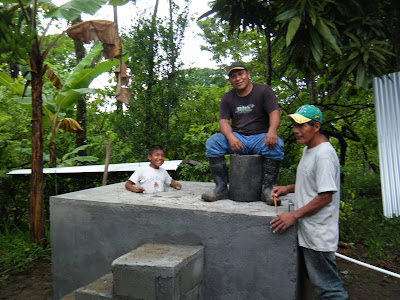
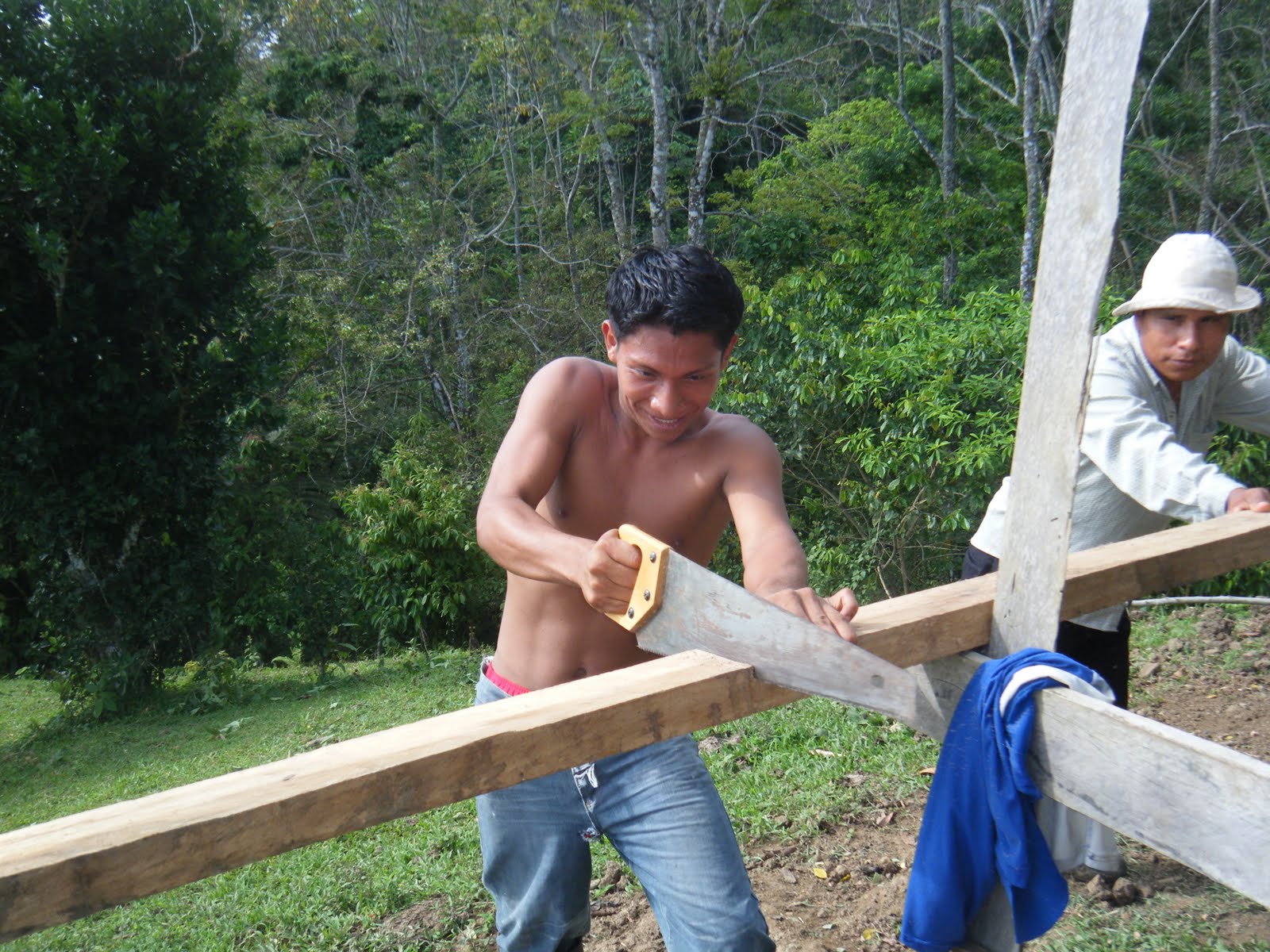
We have reached the downhill slope with regards to the latrine project. We only have about 3 composters and 7 pit latrines to go. It has been a professionally and physically challenging time for me, but it has been the most rewarding part of my service so far watching men transform from not wanting to pick up tools they didn't know the name for, to being able to carry out most of the construction by themselves. And after spending so much time working so closely, my relationship with the workers has become much closer. Work days are filled with jokes, laughs, and openly expressed anxieties about what they will do with themselves when I leave. I feel happy about what they have been able to accomplish and learn throughout the process about initiative, responsibility, and the realities of executing a project like this. Here are some photos of what we´ve been up to.





Saturday, March 26, 2011
The arrival of materials
After some unexpected delays in receiving project funding, it was deposited a couple of weeks ago, and I promptly headed out with my latrine committee to buy the supplies. This week, the first deliveries arrive. Next week, construction begins. For now, I leave you with pictures and a huge, heartfelt thank you to everyone who donated to help make this project happen. I have a few busy months ahead of me, but I will do my best to keep you as updated as possible.
Community meeting to organize a work schedule and photos of the delivery:


Community meeting to organize a work schedule and photos of the delivery:


Small-scale health promotion
As PCVs we are always thinking about new ways to acheive our goals. Get people to wash their hands more often. How to encourage them to care about water contamination. To take steps to prevent disease transmission.
Here are a couple of simple ideas I´ve been spreading around. I wish I had started sooner, because people are responding really positively. Fellow PCV Louis told me about the success he´s been having with Tippy Taps, which are hands-free hand-washing stations. They conserve water, make hand-washing convenient, and what´s more, fun! In my community, kids have been the real change agents in adopting these, but the adults are coming around too, once they saw that it costs nothing and that this method can help keep their family´s water cleaner. Current hand washing methods involve dipping a cup into a bucket of water, pouring the water over your hands and trying to wash that way, then sticking the contaminated cup back over and over. For this reason and others, most people, don´t do it so often. Here is what the tippy tap looks like:

Education about hand washing is one thing. Behavior change is another. I think the Tippy Tap removes many of the barriers to action that existed before and is a great way to encourage families. And the couple of hours it takes to assemble everything allows me to sneak in a few tips and pieces of information in a non-formal environment where people are more likely to listen and engage.
I have also been working on improving the faucet-in-bucket design. Everyone stores water in buckets, and sometimes leave them untapped, or acts carelessly with regard to contaminating the water inside. Using dipping cups to get water out for drinks, plate and hand washing and other tasks makes the water dirty awfully fast. Amoebas, giardia, worms, and bacteria can thrive. I have explained to families interested in the bucket how to chlorinate their water, and then tap the bucket and only take water out of it through the faucet. People are a lot more open to chlorinating their water than when I first got here and many people have shown a lot of interest and understanding reagarding water contamination at the household level.
The more time I spend in my community, the more clout and confianza I have with the people. In recent months, I have noticed them latching on a little more willingly to my ideas and showing more initiative with regard to asking for my help. I have improved the leakage problem with the buckets by placing two small pieces of plastic between the wall and the nut that fastens the faucet in place. I am going to continue working to streamline the process before showing a community counterpart how to do it (they currently regard me as a magician). When things go poorly or are difficult, people can get negative and write things off really fast. The method needs to be quick and easy, and I want to make sure it´s just right before unveiling the tricks behind the magic show.

Here are a couple of simple ideas I´ve been spreading around. I wish I had started sooner, because people are responding really positively. Fellow PCV Louis told me about the success he´s been having with Tippy Taps, which are hands-free hand-washing stations. They conserve water, make hand-washing convenient, and what´s more, fun! In my community, kids have been the real change agents in adopting these, but the adults are coming around too, once they saw that it costs nothing and that this method can help keep their family´s water cleaner. Current hand washing methods involve dipping a cup into a bucket of water, pouring the water over your hands and trying to wash that way, then sticking the contaminated cup back over and over. For this reason and others, most people, don´t do it so often. Here is what the tippy tap looks like:
You use the foot pedal to pull the jug forward, and the water spouts out of a small hole made a few inches beneath the cap. Rain-guard soap dish made out of sardine and tuna cans hangs to the left.
Education about hand washing is one thing. Behavior change is another. I think the Tippy Tap removes many of the barriers to action that existed before and is a great way to encourage families. And the couple of hours it takes to assemble everything allows me to sneak in a few tips and pieces of information in a non-formal environment where people are more likely to listen and engage.
I have also been working on improving the faucet-in-bucket design. Everyone stores water in buckets, and sometimes leave them untapped, or acts carelessly with regard to contaminating the water inside. Using dipping cups to get water out for drinks, plate and hand washing and other tasks makes the water dirty awfully fast. Amoebas, giardia, worms, and bacteria can thrive. I have explained to families interested in the bucket how to chlorinate their water, and then tap the bucket and only take water out of it through the faucet. People are a lot more open to chlorinating their water than when I first got here and many people have shown a lot of interest and understanding reagarding water contamination at the household level.
The more time I spend in my community, the more clout and confianza I have with the people. In recent months, I have noticed them latching on a little more willingly to my ideas and showing more initiative with regard to asking for my help. I have improved the leakage problem with the buckets by placing two small pieces of plastic between the wall and the nut that fastens the faucet in place. I am going to continue working to streamline the process before showing a community counterpart how to do it (they currently regard me as a magician). When things go poorly or are difficult, people can get negative and write things off really fast. The method needs to be quick and easy, and I want to make sure it´s just right before unveiling the tricks behind the magic show.
the face of a happy and crazed inventor
Wednesday, January 12, 2011
Project fundraising update.
Community members and I have been working to plan and prepare for a sanitation project that will provide latrines to 28 families in the village. Please consider donating to the project if you haven't already. This is a low-cost way to greatly improve the health of the people of Quebrada Pastor. Every single penny goes toward building materials. Community members provide all of the labor.
Since I initially posted the project we have raised $635. Thank you to everyone who has generously given. Another organization has pledged to donate half the budget, leaving $2050 to raise.This is a reasonable amount if a few individuals, organizations or corporations could come together. Please let me know if I can forward more project information to you or someone you know who is interested in donating. We wanted to start building this month but cannot get started until all the funds are collected. Everyone has worked hard to get this far and we are eager to get started.
To donate or read more about the project go here.
Contact me at cvbasham@gmail.com.
Since I initially posted the project we have raised $635. Thank you to everyone who has generously given. Another organization has pledged to donate half the budget, leaving $2050 to raise.This is a reasonable amount if a few individuals, organizations or corporations could come together. Please let me know if I can forward more project information to you or someone you know who is interested in donating. We wanted to start building this month but cannot get started until all the funds are collected. Everyone has worked hard to get this far and we are eager to get started.
To donate or read more about the project go here.
Contact me at cvbasham@gmail.com.
Friday, November 12, 2010
Help us build latrines in Quebrada Pastor
The time has come. The last year in my site has been spent preparing for and planning a latrine project. The participants began with no knowledge of what was required, and little understanding of how better sanitation can help them improve their health. Since then, we have worked to provide better education and management skills to create a project that truly belongs to this community. This is their project, and with my help, they will continue to learn how to manage the funds, buy materials, and build the latrines. We are starting with 28 latrines, which will improve community latrine coverage by about 30 percent. These 28 families have proven their committment to this project, and will act as examples for others.
The community, through manual labor and use of local materials, will contribute 40 percent of the project´s cost. We must now raise $5,377 to pay for materials and transporation. PC Panama has an existing relationship with an organization which will donate 50 percent of that budget, which leaves $2,688.50 to be raised by friends, family, and other organizations in the United States. We hope to start construction in late January for February, when the weather is good and the big cocao harvests are done. You can help, by reading about the project and donating here. All donations are tax deductible. Similarly, if any of you have tips of organizations or companies who would be interested in making a donation, please contact me.
As always, thanks for reading and for your support.
The community, through manual labor and use of local materials, will contribute 40 percent of the project´s cost. We must now raise $5,377 to pay for materials and transporation. PC Panama has an existing relationship with an organization which will donate 50 percent of that budget, which leaves $2,688.50 to be raised by friends, family, and other organizations in the United States. We hope to start construction in late January for February, when the weather is good and the big cocao harvests are done. You can help, by reading about the project and donating here. All donations are tax deductible. Similarly, if any of you have tips of organizations or companies who would be interested in making a donation, please contact me.
As always, thanks for reading and for your support.
Thursday, September 9, 2010
Project Updates and FAQ.
How is the latrine project going?
It could be worse. It could be better. The hardest part is trying to secure funding.
I put about six months into trying to work with government agencies for . They are the Panama equivalents to our Department of Health, or EAP. These agencies are theoretically responsible for managing and/or funding projects country-wide. I say theoretically because due to a variety of reasons, in my experience at least, many tend to be unable or unwilling to do it. Despite all of the obstacles, I still thought working with local authorities was a more ¨sustainable¨option. My committee could develop the project with personel they could have lasting relationships with, and learn more about how to interact with formal governement agencies (I wrote a little about this before here.), which many are intimidated to do . At the outset anyway, it looked like we would have less trouble finding support, because I would be there as a liason for the duraction of the project.
The other choice for project funding is what is called a PCPP-- Peace Corps Partnership Program. Volunteers essentailly write a grant proposal, which is posted on the Peace Corps Web site, and rely on organizations, individuals, and other interested parties to fund the project. I was initially hesistant about using this option because I felt that the funding for a project with a resonable budget should come from within Panama. My community members cannot replicate the PCPP process after I leave, and I run the risk of having them view this project as something I did for them or brought to them, rather than something they acheived for themselves. To me, that is worse than not building any latrines at all. The upside of the PCPP is that it does allow us more control in the actual planning and managing of the project, which is a huge learning opportunity for me and my community members, and almost makes up for the funding aspects.
Up until last week, we were still trying to work with the agencies. About a month ago, I presented my latrine committee with the option of a PCPP, and they still chose to try the agency approach. On Friday, when the Ministry of Health (the most recent of the agencies we´ve tried to work with) s tood us up for a charla they insisted they give, we reached the end of the line. This came after months of cancelled meetings, ignored phone calls, and a complete lack of direction. My committee was unwilling to continue that way, and I was too. Most of our time was spent waiting, and we had little to show for the months we´d invested. There was no guarantee they would ever be able to fund the project anyway. So with a little prodding from me, they chose to go ahead with the PCPP, where the funding is a more sure thing. Furthermore, about half of participating families want composting latrines, which are more costly and harder to get agencies to support (This will be an explanation for another post).
So I have one more charla to do with them about the use and maintenence of latrines, then I will work the committees to teach them how to make a budget, work plans, and other necessary pre-planning. Then I will submit this with the rest of the PCPP and try to do as much fundraising as I can from here. It should take a few months to raise all the money, and then we can begin contruction.
People outside of the Peace Corps bubble sometimes struggle to understand this process. Why it takes a year to get this far. For better or for worse, that is what grassroots development is. I walked into a community that didn´t know what Peace Corps was, thought I was either a) rich or b) a bad guy, and had a heck of a lot to learn about latrines and project planning. Before even talking about projects, I had to gain their trust first, get to know them, and identify their real needs. After we decided on a latrine project, we established a committee, and I began the slow process of trying to start a project with them.
Other development agencies might have written the community a check or delivered the materials, without deciding who should participate, and whether the people knew how to use or maintain latrines. Ten years ago, the Minsitry of Health did something similar to this, and recipients used all the materials for latrines to build chicken coops. People in my community are used to going to the bathroom in the woods, or the creek, and the latrine use presents a lot of issues. They are not for everyone. Not yet, anyway.
It takes time to determine real interest, provide trainings about disease transmission, use and maintencnce, and see who is still interested at the end . Projects that hand things out and don´t do the groundwork first fail, especially in rural areas like mine. I don´t want this project to fail. So while it has been slow, I think it will be more successful in the end, and in the meantime, I have stayed busy enough with other side projects and work in other communities. But I look forward to actually getting this project off the ground when we start building. My counterpart organized our first work day to start digging latrine holes this Saturday to keep motivation and focus. And you know, that whole if you dig it, it will come thing.
What do people do for work?
Most people in my community are subsistence farmers and do not have other jobs. Their chief income is from their cocoa farms. Harvest time is October through early January, and that is when they make their largest profits (up to a few hundred dollars a month for someone with a well-maintained well-producing farm). As for where they get the rest of their money, I am still not sure. Some families sell oranges, lemons, or root vegetables for some extra income. Others also collect welfare checks each month, and use the scholarship money the government awards to students to make ends meet. The people are poor, but they are genearlly able to meet their basic needs. This complacency, combined with a lack of education and capital makes upward movement uncommon.
What are education levels?
People over 30 in my community mostly made it to sixth grade, some stopped earlier. Back then, there was no highway through the community, and to continue past sixth grade meant taking a boat to a community that had a junior high. This was costly and required that students stay overnight with family that lived where the school was, or madke some other arrangement. Few continued. Today, we have Pre-K through 9th grade in my community, which is more than most Ngobe communities have. Unfortunately, for those that make it to 9th grade, few continue on because that means traveling to another community by bus. This costs 50 cents a day and this cost, combined with uniforms and school supplies, is too high for most familist in my village. Last year, only two boys graduated high school from our community. I do think that education and schools are more valued now than they must have been years ago, but it is still hard to see families keep their kids at home due to a lack of money or hope that the investment is worth it.
It could be worse. It could be better. The hardest part is trying to secure funding.
I put about six months into trying to work with government agencies for . They are the Panama equivalents to our Department of Health, or EAP. These agencies are theoretically responsible for managing and/or funding projects country-wide. I say theoretically because due to a variety of reasons, in my experience at least, many tend to be unable or unwilling to do it. Despite all of the obstacles, I still thought working with local authorities was a more ¨sustainable¨option. My committee could develop the project with personel they could have lasting relationships with, and learn more about how to interact with formal governement agencies (I wrote a little about this before here.), which many are intimidated to do . At the outset anyway, it looked like we would have less trouble finding support, because I would be there as a liason for the duraction of the project.
The other choice for project funding is what is called a PCPP-- Peace Corps Partnership Program. Volunteers essentailly write a grant proposal, which is posted on the Peace Corps Web site, and rely on organizations, individuals, and other interested parties to fund the project. I was initially hesistant about using this option because I felt that the funding for a project with a resonable budget should come from within Panama. My community members cannot replicate the PCPP process after I leave, and I run the risk of having them view this project as something I did for them or brought to them, rather than something they acheived for themselves. To me, that is worse than not building any latrines at all. The upside of the PCPP is that it does allow us more control in the actual planning and managing of the project, which is a huge learning opportunity for me and my community members, and almost makes up for the funding aspects.
Up until last week, we were still trying to work with the agencies. About a month ago, I presented my latrine committee with the option of a PCPP, and they still chose to try the agency approach. On Friday, when the Ministry of Health (the most recent of the agencies we´ve tried to work with) s tood us up for a charla they insisted they give, we reached the end of the line. This came after months of cancelled meetings, ignored phone calls, and a complete lack of direction. My committee was unwilling to continue that way, and I was too. Most of our time was spent waiting, and we had little to show for the months we´d invested. There was no guarantee they would ever be able to fund the project anyway. So with a little prodding from me, they chose to go ahead with the PCPP, where the funding is a more sure thing. Furthermore, about half of participating families want composting latrines, which are more costly and harder to get agencies to support (This will be an explanation for another post).
So I have one more charla to do with them about the use and maintenence of latrines, then I will work the committees to teach them how to make a budget, work plans, and other necessary pre-planning. Then I will submit this with the rest of the PCPP and try to do as much fundraising as I can from here. It should take a few months to raise all the money, and then we can begin contruction.
People outside of the Peace Corps bubble sometimes struggle to understand this process. Why it takes a year to get this far. For better or for worse, that is what grassroots development is. I walked into a community that didn´t know what Peace Corps was, thought I was either a) rich or b) a bad guy, and had a heck of a lot to learn about latrines and project planning. Before even talking about projects, I had to gain their trust first, get to know them, and identify their real needs. After we decided on a latrine project, we established a committee, and I began the slow process of trying to start a project with them.
Other development agencies might have written the community a check or delivered the materials, without deciding who should participate, and whether the people knew how to use or maintain latrines. Ten years ago, the Minsitry of Health did something similar to this, and recipients used all the materials for latrines to build chicken coops. People in my community are used to going to the bathroom in the woods, or the creek, and the latrine use presents a lot of issues. They are not for everyone. Not yet, anyway.
It takes time to determine real interest, provide trainings about disease transmission, use and maintencnce, and see who is still interested at the end . Projects that hand things out and don´t do the groundwork first fail, especially in rural areas like mine. I don´t want this project to fail. So while it has been slow, I think it will be more successful in the end, and in the meantime, I have stayed busy enough with other side projects and work in other communities. But I look forward to actually getting this project off the ground when we start building. My counterpart organized our first work day to start digging latrine holes this Saturday to keep motivation and focus. And you know, that whole if you dig it, it will come thing.
What do people do for work?
Most people in my community are subsistence farmers and do not have other jobs. Their chief income is from their cocoa farms. Harvest time is October through early January, and that is when they make their largest profits (up to a few hundred dollars a month for someone with a well-maintained well-producing farm). As for where they get the rest of their money, I am still not sure. Some families sell oranges, lemons, or root vegetables for some extra income. Others also collect welfare checks each month, and use the scholarship money the government awards to students to make ends meet. The people are poor, but they are genearlly able to meet their basic needs. This complacency, combined with a lack of education and capital makes upward movement uncommon.
What are education levels?
People over 30 in my community mostly made it to sixth grade, some stopped earlier. Back then, there was no highway through the community, and to continue past sixth grade meant taking a boat to a community that had a junior high. This was costly and required that students stay overnight with family that lived where the school was, or madke some other arrangement. Few continued. Today, we have Pre-K through 9th grade in my community, which is more than most Ngobe communities have. Unfortunately, for those that make it to 9th grade, few continue on because that means traveling to another community by bus. This costs 50 cents a day and this cost, combined with uniforms and school supplies, is too high for most familist in my village. Last year, only two boys graduated high school from our community. I do think that education and schools are more valued now than they must have been years ago, but it is still hard to see families keep their kids at home due to a lack of money or hope that the investment is worth it.
Sunday, May 2, 2010
Not exactly the 9-5 Dolly was singing about
I am in David today and tomorrow, doing a lot of work on the computer that I haven´t had time to take care of earlier. That, and I hadn´t taken a ¨personal day¨out of site since vacation in March, and I found myself getting grumpy with some of my near and dear community members. When I get grumpy, I know it´s time for a time out. I think I just needed some ice cream.

So anyway, the end of April was busy, and May is shaping up to look like more of the same. Here´s a summary of what I´ve been up to.
1. On the latrine front: Last Monday, my latrine committee and I met with a representative from ANAM, the government´s environmental agency, to complete a community diagnostic activity. It is the first of several steps we will complete in order to plan our latrine project and obtain funds. ANAM itself won´t provide them, but our contact with this agency can help us obtain money from another, or a private donor, and the documents we complete with them can be used as jumping-off points for future projects. They were incredibly pleased with the committee, and said they did a great job participating. This of course made all my community members beam with pride, and many of them came to talk to me afterward to see if I agreed that yes, they did a great job! I also invited a representative from the Ministry of Health (MINSA), who was very helpful and enthusiastic.
Our next step from here involves filling out a detailed project plan, which I will do over the course of several weeks with my counterpart at ANAM´s office in Changuinola. I would like to involve the rest of the committee members in this process as much as possible, but I´m still thinking about how I can best do that.
2. On the water front: My latrine committee held its ¨elections¨ on Friday, and I came to brief them first with a charla about the roles and responsibilities of each member of the board. It went well, and they seemed grateful for the information. It seem the President has given the laws that the committee must follow no more than a cursory glance, and everyone was prepared to vote for and fill positions they weren´t entirely sure about.
The biggest obstacle I have had in working with my water committee has been that the group is extremely dysfunctional. They have all of these internal issues, grudges, family histories, gossip, whatever, that prevents them from communicating, working as a team, or well, working at all. I also presented a few notes on the virtues and vices of good team work, and tried to offer some motivation for the future. After having just completed six months in service, only now are the members starting to tell me the true past of the aqueduct committee, and everyone´s story is different. The common themes are: corruption, selfishness, rule-breaking, lack of responsibility.
The other obstacle I have been met with is that, until recently, no one seemed willing to work on the problems. But sometimes you just have to give people time. After months of gentle, and sometimes, not-so-gentle prodding, the President and the Vice President seem more willing to listen to what I have to say and the charlas, trainings, and work days that I have offered. They see now that neither the committee nor the water system is functioning as it should. The biggest problems I have seen since arriving here in Panama among water commitees are people issues, organization, motivation, or conflict issues. The technical stuff is easy once you have a strong team. Now I just have to get them to believe me.
3. The kids: A few weeks ago, I went around to the 7th, 8th, and 9th grades to talk about Panama Verde. It is an environmental group that was founded by a Peace Corps volunteer, but is now managed on a national level by Panamanians. It promotes conservation projects and the development of leadership skills among youth with equal emphasis.
In my community, all of our biggest creeks run directly to the ocean. They are contaminated with chemicals, trash, and human excrement. Candy, cookie and food wrappers litter the ground. People burn trash-laden with plastics, and the breeze blows it all back into their house. Most families cook on fogons in their houses, which are essentially indoor campfires which use use copiuous amounts of firewood (deforestation). The thick, black smoke blows right back at them. The lungs of all of my neighbor´s children rattle. (I am hoping that my group will be interested in a stove project I plan to suggest... more coming on this) Obviously there are dozens of opportunities for environmental education and projects in my QP. Panama Verde empowers the jovenes (youth-ish 12-25) to take it on themselves. I am a counselor for the group. I give them ideas, help them fundraise, teach them through charlas, activities, and games, but they also form their own governing board (directiva), and take on more and more as time goes on. One group that was started by a Peace Corps volunteer a few years ago in a neighboring town is now run entirely by the jovenes without any help from adults.
That for me is the most exciting part. The development of self-esteem, problem-solving, and leadership skills. These kids have very few opportunities for that, and in fact, have very few opportunities to just hang out and be kids. If they are not in school, they are working in the finca or taking care of younger siblings. Panama Verde is a real opportunity for them to think about personal development, all while helping out their community.
I had a list of 73 kids who said they wanted to participate. So, I invited the regional coordinator for Panama Verde to come and help me with a charla to explain more clearly what PV is and what sort of work we would do. I was hoping for a group of 10-15. That meeting was Saturday, and six students came. But, as the coordinator pointed out to me, those are the ones who really wanted to be there. And they seemed genuinely excited and dedicated. I plan to recruit a few more members, and we´ll have a swear-in at the end of May.
4. Project Management and Leadership (PML)! Peace Corps invites all of its volunteers to bring a counterpart to a PML conference after five months in site. I was unable to attend mine because I was held up in the clinic with that bothersome foot infection, but my counterpart did attend, and loved it. The conference focuses on the following themes: Identifying Personal Goals, Values, and Missions for Groups, Time and Money Management, Forming Effective Groups, Facilitating Group Interaction, Formal Letter Writing, and Interacting with Agencies.
The information seems fairly basic to us, but for many of the Panamanian or indigenous peoples we work with, PML might be the first time anyone told them to write down their appointments in an agenda, or that to offer someone positive re-inforcement is better than negative, or even how keeping close track of your monthly expenses can help you save money. The ideas are simple, but many have never had opportunities to properly learn and practice them. Many of the counterparts get a lot out of it, some of it is over their heads, but at the very least, it is a reward away from the communities, and a chance for them to feel special. The idea is that they can help their PCV present these concepts in their communities at a later date.
Enter Cati! I am bringing PML to QP this month, condensing three days of material into two, and presenting it all with the help of three other volunteer friends. I invited all the members of my latrine and water committees, and so far, everyone seems willing to come. I typed up formal letter invitations and hand-delivered each. I think this helped, they respect a formal letter. I am trying to obtain some donations of materials from a local bookstore in Changuinola, and will be busy prepping the materials in the coming weeks. I am super excited to work with my counterpart Lucas and my committees in a new capacity, and one that will empower them and provide them with some legitimate tools to continue forward. And, it´s always good to bring in back-up volunteer reinforcements. (Three other people are saying what Cati is saying... maybe now I´ll consider it!)
5. Spent two days surveying for a new aqueduct system in a nearby PCV community. The tool we use to survey is a water level, which provides measurements that are much more accurate than a GPS or abney level or whatever other tools other professionals might use. Water levels have been used in various forms for centuries, and work on the principal that water always looks for its own level. Picture: a reservoir tank out of which exits a clear plastic tube which extends for 50 feet of length, and then another 10 feet up a straight pole, with a measuring tape attached. As you move along the terrain, you maintain the reservoir higher than the pole, and move from point to point. The water level gives you the change in altitude between the two points, and the marks you´ve made on the length of the tube tell you the distance. This, combined with measuring a source and doing basic population forecasting, are the first steps in planning for an aqueduct system. The water level is a PC favorite because it is something we can do with our community members, and helps them understand some of the basic principals of gravity-flow water systems.
So that´s what I´ve been up to.
The days we surveyed were HOT AS HADES, but it was fun to do some real dirty work, and the company of other PCVs is always appreciated. This is kind of a ridiculous pose I am striking but que va...
So on Tuesday, I am leaving for three days of aqueduct technical training in one of our group 64 volunteer´s sites. I am excited to see all of my EH folks again, since I felt robbed and socially-deprived after missing PML in March.
Monday, April 19, 2010
Drinkable water in 9 steps
1. Move to a rainy climate. Preferably Bocas del Toro in Panama.
2. Excavate a hole using a machete and shovel, as I did, or site another location for your tank.
3. Cut 3 or 4¨PVC tube lengthwise with hacksaw, place on roof with elbow at the end.
4. Remove tank top with hot matchete and hammer. (this takes hours)
5. Poke hole for faucet with heated peace of rebar.
6. Tap threads for faucet with metal-thread-tapper thingy.
7. Wrap faucet in teflon tape, screw in, and seal with caulk.
8. Place mesh over top to keep the creepy-crawlies out.
9. Place tank and enjoy the parasite-free fruits of your labor.
(fellow PCVs used as models)
I use my rain water for everything. In good, steady rain, this 55-gallon tank fills in 20 minutes. I still bleach it just to be safe (who knows what´s living on my roof?), but this is the cleanest water I can be drinking.
Note on water use: A lot of contamination in my site happens in the house when people are dipping their dirty hands into buckets of stored water to make drinks or food. I installed a faucet in one of the five-gallon buckets most families use for storage, filled it with juice, and brought it to a meeting to share. I discreetly called attention to it after a latrine charla, which included a lot of talk about water contamination, and would you guess? PEOPLE WENT WILD. They roared! They hollered! They could not believe my brilliance, and more importantly, that bucket is cool, they said. Everyone wanted one. I promised that if they buy the faucet and nut, I will happily do the work for them. I used their enthusiasm as an opportunity to continue discussion about disease transmission and contamination at the household level. It´s a cheap, easy solution for a big problem.

Total cost of rain-water catchment system: $60.
Total cost of installing faucet in a 5-gallon bucket: $1.65, if tape and caulk are provided.
2. Excavate a hole using a machete and shovel, as I did, or site another location for your tank.

3. Cut 3 or 4¨PVC tube lengthwise with hacksaw, place on roof with elbow at the end.
4. Remove tank top with hot matchete and hammer. (this takes hours)

5. Poke hole for faucet with heated peace of rebar.
6. Tap threads for faucet with metal-thread-tapper thingy.
7. Wrap faucet in teflon tape, screw in, and seal with caulk.

8. Place mesh over top to keep the creepy-crawlies out.
9. Place tank and enjoy the parasite-free fruits of your labor.

(fellow PCVs used as models)
I use my rain water for everything. In good, steady rain, this 55-gallon tank fills in 20 minutes. I still bleach it just to be safe (who knows what´s living on my roof?), but this is the cleanest water I can be drinking.
Note on water use: A lot of contamination in my site happens in the house when people are dipping their dirty hands into buckets of stored water to make drinks or food. I installed a faucet in one of the five-gallon buckets most families use for storage, filled it with juice, and brought it to a meeting to share. I discreetly called attention to it after a latrine charla, which included a lot of talk about water contamination, and would you guess? PEOPLE WENT WILD. They roared! They hollered! They could not believe my brilliance, and more importantly, that bucket is cool, they said. Everyone wanted one. I promised that if they buy the faucet and nut, I will happily do the work for them. I used their enthusiasm as an opportunity to continue discussion about disease transmission and contamination at the household level. It´s a cheap, easy solution for a big problem.

Total cost of rain-water catchment system: $60.
Total cost of installing faucet in a 5-gallon bucket: $1.65, if tape and caulk are provided.
Monday, January 25, 2010
So what exactly is it that you are doing?
Up until now, I have written mostly about the relationships I´ve formed and the cultural adjustments I´ve made since arriving in site. Our first three months are dedicated to an in-depth community analysis and building trust and friendships within the community. This is an essential part of Peace Corps service and sustainable development. Communities must be able to think critically about the resources they have, what they need, and how they can acheive it for themselves. Decades of paternalism and the delivery of ¨projects¨ for which they neither had to work nor plan end only in more dependence on government agencies and NGOs to bring villages what they need. When people participate and work for something, success rates are much higher.
The cornerstone of Peace Corps and sustainable development revolves around the idea that I teach as I go along, and that the community participates, plans, and manages its own project with my help. If they do this, when I leave, the knowledge and skills they have gained will stay, and the can continue forward in the future.
It´s a great idea, but it´s harder than it sounds. There are plenty of people in my village who believe all gringos are bad guys, who still don´t invite me in when I come to pasear. Many children and adults alike thought I came to take their kids back to the United States to be sold. Some think gringos eat people. A fellow volunteer lives in a community where everyone thought she was a spy and didn´t want to share anything with her for fear of where the information was going.
I´ve come a long way in my community since I arrived at the end of October, but you can see why the first step of building relationships is so important. We are up against a lot of ugly history, cultural boundaries, and foundationless fear and rumors. The first step of our Environmental Health project framework is to motivate and organize community members. To help them form committees, understand how to run meetings effectively, and to get people to actively participate in their own development. People in my community rarely attend meetings, and those who do are the same people over and over. Most of these people view ¨the community¨as only the 30-ish houses nearest the road, and ignore the remaining 65 that are spread out over hills, across rivers, and as far as two hours or more from the street. To advise every house of a meeting requires at least four days of walking. The disperese nature of the community, and the overall lack or motivation and organization will be one of my biggest challenges.
Such work is the first goal of the Environmental Health framework. The other two revolve around water and sanitation. Depending on the needs of a community, EH volunteers may educate existing water committees about the maintenence of an aqueduct, basic aqueduct theory, trouble shooting, waterborne diseases and better managing of time, funds, and meetings. This is a huge felt need in QP, where broken pipes go unfixed for weeks, some houses connected to the aqueduct have been without water for months, and for the fun of the ick factor, our water reserve tanks have crabs and sometimes worms inside of them.
I attended my first water committee meeting this past week, and while it was an experience that was at times frustrating, and I still battle with Getting People to Listen To Me, it is also heartening because I know I have the ability and resources to help them in many important and sustainable ways. EH volunteers also help to plan for and design other water systems, be it aqueduct lines or rain-water catchment. About 70 percent of my community is without running water in their homes, and use springs, creeks or wells (many of which are extermely dubious) for drinking, cooking and wash water. I am still thinking about what can be done for these homes. They are all so spread out, it is impossible that one water system could serve them all, and they also lack organization of any kind. They tell me they want water, but they haven´t come to meetings, or done anything other than voice their need. Beginning to work with some leaders in small committees and planning for a future project, or at the least, rain-water catchment systems is something I hope to do as well, though as I see it now, it cannot be my first priority.
Santitation is the other element. EH volunteers educate about fecal-oral transmission pathways, and essentially, promoting the construction, proper use and maintenence latrines. In Bocas, living in an indigenous community, this is another element where cultural understanding is key. Most of our technical sanitation training revolved around building and promoting compositng latrines. In my community, only about 10 percent of houses (generous estimations) use latrines, and those are full or poorly maintained. All of them are pit latrines, and most of them have buckets of wash water to clean with after use. Toilet paper is used by only a few families, and the others have no interest in it becasue they feel cleaner using water.
Which is a problem for composting latrines, which must be kept dry. It is also a problem because so few houses have a nearby water source, so they are extremely unlikely to use composting latrines if they could just go to the creek, or in the woods, and wash afterwards. I am realistic about the fact that, right now, I know of only about five families who would properly use and maintain a composting latrine. For most, pit latrines are a better option. In time, many will be ¨ready¨ for composting latrines, but as of right now, few people have identified them as a priority.
I am running into a small problem because my counter part solicitied PC for the specific purpose of a compositing latrine project. He knows they are better for the environment, last longer, and of course produce a fabulous compost for the finca. I think he is unrealistic about the scope of a project we could undertake in QP, as he is comparing our situation to one in a nearby community where 35 latrines were built by a PC volunteer. But this is my job: assessment, and then education and promotion. I have plenty of time to gauge genuine interest (and not just what he claims when he went around and told everyone I was coming to work on composting latrines) and feasibile success rates. Many volunteers have built latrines in Bocas that went unused or were unfinished. I would hate to do that.
So that, in short, is what EH volunteers will do, and as I wrap up my community analysis, what I am imagining for my time here in Panama. As always, leave me questions in the comments.
The cornerstone of Peace Corps and sustainable development revolves around the idea that I teach as I go along, and that the community participates, plans, and manages its own project with my help. If they do this, when I leave, the knowledge and skills they have gained will stay, and the can continue forward in the future.
It´s a great idea, but it´s harder than it sounds. There are plenty of people in my village who believe all gringos are bad guys, who still don´t invite me in when I come to pasear. Many children and adults alike thought I came to take their kids back to the United States to be sold. Some think gringos eat people. A fellow volunteer lives in a community where everyone thought she was a spy and didn´t want to share anything with her for fear of where the information was going.
I´ve come a long way in my community since I arrived at the end of October, but you can see why the first step of building relationships is so important. We are up against a lot of ugly history, cultural boundaries, and foundationless fear and rumors. The first step of our Environmental Health project framework is to motivate and organize community members. To help them form committees, understand how to run meetings effectively, and to get people to actively participate in their own development. People in my community rarely attend meetings, and those who do are the same people over and over. Most of these people view ¨the community¨as only the 30-ish houses nearest the road, and ignore the remaining 65 that are spread out over hills, across rivers, and as far as two hours or more from the street. To advise every house of a meeting requires at least four days of walking. The disperese nature of the community, and the overall lack or motivation and organization will be one of my biggest challenges.
Such work is the first goal of the Environmental Health framework. The other two revolve around water and sanitation. Depending on the needs of a community, EH volunteers may educate existing water committees about the maintenence of an aqueduct, basic aqueduct theory, trouble shooting, waterborne diseases and better managing of time, funds, and meetings. This is a huge felt need in QP, where broken pipes go unfixed for weeks, some houses connected to the aqueduct have been without water for months, and for the fun of the ick factor, our water reserve tanks have crabs and sometimes worms inside of them.
I attended my first water committee meeting this past week, and while it was an experience that was at times frustrating, and I still battle with Getting People to Listen To Me, it is also heartening because I know I have the ability and resources to help them in many important and sustainable ways. EH volunteers also help to plan for and design other water systems, be it aqueduct lines or rain-water catchment. About 70 percent of my community is without running water in their homes, and use springs, creeks or wells (many of which are extermely dubious) for drinking, cooking and wash water. I am still thinking about what can be done for these homes. They are all so spread out, it is impossible that one water system could serve them all, and they also lack organization of any kind. They tell me they want water, but they haven´t come to meetings, or done anything other than voice their need. Beginning to work with some leaders in small committees and planning for a future project, or at the least, rain-water catchment systems is something I hope to do as well, though as I see it now, it cannot be my first priority.
Santitation is the other element. EH volunteers educate about fecal-oral transmission pathways, and essentially, promoting the construction, proper use and maintenence latrines. In Bocas, living in an indigenous community, this is another element where cultural understanding is key. Most of our technical sanitation training revolved around building and promoting compositng latrines. In my community, only about 10 percent of houses (generous estimations) use latrines, and those are full or poorly maintained. All of them are pit latrines, and most of them have buckets of wash water to clean with after use. Toilet paper is used by only a few families, and the others have no interest in it becasue they feel cleaner using water.
Which is a problem for composting latrines, which must be kept dry. It is also a problem because so few houses have a nearby water source, so they are extremely unlikely to use composting latrines if they could just go to the creek, or in the woods, and wash afterwards. I am realistic about the fact that, right now, I know of only about five families who would properly use and maintain a composting latrine. For most, pit latrines are a better option. In time, many will be ¨ready¨ for composting latrines, but as of right now, few people have identified them as a priority.
I am running into a small problem because my counter part solicitied PC for the specific purpose of a compositing latrine project. He knows they are better for the environment, last longer, and of course produce a fabulous compost for the finca. I think he is unrealistic about the scope of a project we could undertake in QP, as he is comparing our situation to one in a nearby community where 35 latrines were built by a PC volunteer. But this is my job: assessment, and then education and promotion. I have plenty of time to gauge genuine interest (and not just what he claims when he went around and told everyone I was coming to work on composting latrines) and feasibile success rates. Many volunteers have built latrines in Bocas that went unused or were unfinished. I would hate to do that.
So that, in short, is what EH volunteers will do, and as I wrap up my community analysis, what I am imagining for my time here in Panama. As always, leave me questions in the comments.
Thursday, December 24, 2009
Volunteer Vignettes
The following incident took place on 12.14.09.
What had been going on in my stomach was not normal. After calling the PC doctor (who is awesome, by the way), and relaying to her a particularly off-putting symptom, she ordered me to the clinc in Changuinola for a poop test.
I loaded my backpack, and began an agonizing descent to the road, where I caught a bus and arrived in Changuinola by noontime. After taking a shower at the regional leader´s house, I walked to the lab like an inmate down death row. I wondered where this process would rank on the list of medical indignities I have suffered in Panama (oh yes, there are others).
The lab is tucked in the bottom floor an impossible-looking three-story building and lacks any kind of signage. It is embarassed about what happens there too, further evidenced by the pink blush of its paint. And I am still unsure whether the building itself is crooked, or that it faces the street at such an abrupt angle that it accidentally gives off a distinctly Alice-in-Wonderland impression.
I entered and sheepishly explained to the desk attendant in hushed Spanish why I came. He presented me with a laughably small vessel for deposit. It had the diameter of a film canister and the depth of a thimble. Seriously?
Before I could think abou the how, he instructed me to leave, do the you know, and come back.
¨No hay un baño aqui?¨ There´s no bathroom here? I must have looked desperate.
¨Aqui no hay agua,¨ There´s no water here, he said unapologetically.
Really? Really? I´d heard about the water going out in Changuinola on the radio, but a medical laboratory without water? How can that be? I didn´t want to know. I shuffled back to the regional leader´s house, did the unmentionable, and went back to the lab. He told me I had an hour to wait, so I went to the Internet to distract myself from the plight of the poor soul whose job it is to look at people´s excrement under a microscope in a waterless lab.
When I returned for the results, a mother was in line in front of me with her daughter. The little girl wore a lovely dress, surely donned for her big trip to the city. They still do that in Panama. The desk attendant slid a piece of paper across to the mother and said ¨Ella tiene amebas.¨She has amoebas. He saw me, fetched an identical piece of paper, slide it across the same counter and said, ¨Tiene amebas.¨You have amoebas. Though disturbing, this diagnosis came as a relief. There is medicine for amoebas, and soon I would feel better.
As I left, I wondered how many times a day that man tells someone they have parasites, and if maybe, all day, he just says ¨Tiene amebas,¨ reciting the same script like a broken record. His announcement was so mechanical, identical in tone and structure to that which he delivered to the girl´s mother. Does he just stand there, all day, in that improbable fuschia eye sore and tell one person after another that one-celled protazoa or whatever have invaded their sysems?
How enchanting.
-----------------------
I am all better now thankyouforasking. You take one dose of two pills, and you´re all better. Being sick is yucky and unpleasant, but it is sort of inevitable given the living conditions. Many volunteers proudly recite all of the infections and parasites they´ve had in Panama within minutes of being introduced. This is another reason why I´m afraid I´ll be unable to make normal conversation when I return to the U.S.
What had been going on in my stomach was not normal. After calling the PC doctor (who is awesome, by the way), and relaying to her a particularly off-putting symptom, she ordered me to the clinc in Changuinola for a poop test.
I loaded my backpack, and began an agonizing descent to the road, where I caught a bus and arrived in Changuinola by noontime. After taking a shower at the regional leader´s house, I walked to the lab like an inmate down death row. I wondered where this process would rank on the list of medical indignities I have suffered in Panama (oh yes, there are others).
The lab is tucked in the bottom floor an impossible-looking three-story building and lacks any kind of signage. It is embarassed about what happens there too, further evidenced by the pink blush of its paint. And I am still unsure whether the building itself is crooked, or that it faces the street at such an abrupt angle that it accidentally gives off a distinctly Alice-in-Wonderland impression.
I entered and sheepishly explained to the desk attendant in hushed Spanish why I came. He presented me with a laughably small vessel for deposit. It had the diameter of a film canister and the depth of a thimble. Seriously?
Before I could think abou the how, he instructed me to leave, do the you know, and come back.
¨No hay un baño aqui?¨ There´s no bathroom here? I must have looked desperate.
¨Aqui no hay agua,¨ There´s no water here, he said unapologetically.
Really? Really? I´d heard about the water going out in Changuinola on the radio, but a medical laboratory without water? How can that be? I didn´t want to know. I shuffled back to the regional leader´s house, did the unmentionable, and went back to the lab. He told me I had an hour to wait, so I went to the Internet to distract myself from the plight of the poor soul whose job it is to look at people´s excrement under a microscope in a waterless lab.
When I returned for the results, a mother was in line in front of me with her daughter. The little girl wore a lovely dress, surely donned for her big trip to the city. They still do that in Panama. The desk attendant slid a piece of paper across to the mother and said ¨Ella tiene amebas.¨She has amoebas. He saw me, fetched an identical piece of paper, slide it across the same counter and said, ¨Tiene amebas.¨You have amoebas. Though disturbing, this diagnosis came as a relief. There is medicine for amoebas, and soon I would feel better.
As I left, I wondered how many times a day that man tells someone they have parasites, and if maybe, all day, he just says ¨Tiene amebas,¨ reciting the same script like a broken record. His announcement was so mechanical, identical in tone and structure to that which he delivered to the girl´s mother. Does he just stand there, all day, in that improbable fuschia eye sore and tell one person after another that one-celled protazoa or whatever have invaded their sysems?
How enchanting.
-----------------------
I am all better now thankyouforasking. You take one dose of two pills, and you´re all better. Being sick is yucky and unpleasant, but it is sort of inevitable given the living conditions. Many volunteers proudly recite all of the infections and parasites they´ve had in Panama within minutes of being introduced. This is another reason why I´m afraid I´ll be unable to make normal conversation when I return to the U.S.
Wednesday, November 4, 2009
So, how´s Panama?
I think I spent most of my first week in site in a semi-conscious daze. I have kept surprisingly busy, with something to do each day, if not all day, and have so far had good experiences interacting with the people here. Still, my mind wanders easily. I can block out background Spanish with remarkable efficiency, and I get lost thinking about how I got here, how impossible a task my work seems sometimes, and what all my friends and family are doing back home. It has been surreal for sure.
I am slowly re-adjusting to life with another host family. I have been met by incredibly generous people and families in my (almost!) three months in Panama, and the family I live with now is no exception. My 10-year-old host brother Caesar has the most contagious smile, and will sit with me for hours asking about what life is like ¨por alla¨in the U.S. He fancies himself my chaperone whenever I leave the house, escorting me two minutes to the public telephone, and waiting patiently while I babble away in English, grinning up at me all the while. My family gets endless enjoyment out of watching me fall in the mud, which happens several times a day, but they usually stop laughing long enough to ask if I´m okay.
Being under the miscroscope for all this time though has its frustrations. Ngobes in particular have a habit of staring long past what would be considered appropriate in the United States. I have to keep myself from snapping at my 16-year-old host brother when he arrives at my window to silently observe what I´d hoped would be my only 15 minutes of alone time.
My biggest obstacle has been the sanitation situation. No one washes their hands, dishes are only rinsed, and flies crawl all over food, utensils, and bowls, depositing who-knows-what and possibly laying eggs as well. When the 1-year-old has diarrhea, it gets rubbed over the concrete floor with a wet mop, without soap or bleach. My host mother absentmindedly cleans it up and goes right back to cooking.
I am trying to strike a balance between brainstorming household education techniques and also ignoring certain things in order to keep the fecal-oral transmission charts from haunting my every vacant thought.
I´ve already made a point about washing my hands as much as possible, or risinging dishes when I´ve seen flies on them. But the solutions to these problems aren´t as easy as you´d think. At home, you fill up a five-gallon bucket with water, pour in some cleaner, and mop your floor. (Better yet, your one-year-old wears diapers!) At home, you know your dishes are clean because you take them out of the dish washer yourself and put them safely into a clean cabinet. Here, without running water in the house, implementing sanitation efforts is much more challenging. Studies have shown that having more water available is more effective in reducing diarrhea and disease than water treatment itself, for example. Usually the first solution should be more water, not better water.
So you can see how sometimes life here seems surreal. For those of you who are as panicked about my health as my mother was when she heard all of this, don´t be. I chose to live in three separate houses during my first three months, and I visited my second house the other day. I was delighted to find out they have a latrine, an ocean view, and what appears to be an approved standard of cleanliness. And when you are an environmental health volunteer who works with water and latrines, it goes without saying that where you´ll be living might be without one or both.
There are so many things to think about here each day. I fall asleep every night watching TV with my family. (A lot of famlies have small, black-and-white TVs, powered by car batteries or solar panels.) Dinner is usualy served around 8:45, and I am collapsing gratefully into the floor by nine.
Leave any questions in the comments section. I know I leave a lot out in these quick updates. I´ll fill in the blanks as I can.
I am slowly re-adjusting to life with another host family. I have been met by incredibly generous people and families in my (almost!) three months in Panama, and the family I live with now is no exception. My 10-year-old host brother Caesar has the most contagious smile, and will sit with me for hours asking about what life is like ¨por alla¨in the U.S. He fancies himself my chaperone whenever I leave the house, escorting me two minutes to the public telephone, and waiting patiently while I babble away in English, grinning up at me all the while. My family gets endless enjoyment out of watching me fall in the mud, which happens several times a day, but they usually stop laughing long enough to ask if I´m okay.
Being under the miscroscope for all this time though has its frustrations. Ngobes in particular have a habit of staring long past what would be considered appropriate in the United States. I have to keep myself from snapping at my 16-year-old host brother when he arrives at my window to silently observe what I´d hoped would be my only 15 minutes of alone time.
My biggest obstacle has been the sanitation situation. No one washes their hands, dishes are only rinsed, and flies crawl all over food, utensils, and bowls, depositing who-knows-what and possibly laying eggs as well. When the 1-year-old has diarrhea, it gets rubbed over the concrete floor with a wet mop, without soap or bleach. My host mother absentmindedly cleans it up and goes right back to cooking.
I am trying to strike a balance between brainstorming household education techniques and also ignoring certain things in order to keep the fecal-oral transmission charts from haunting my every vacant thought.
I´ve already made a point about washing my hands as much as possible, or risinging dishes when I´ve seen flies on them. But the solutions to these problems aren´t as easy as you´d think. At home, you fill up a five-gallon bucket with water, pour in some cleaner, and mop your floor. (Better yet, your one-year-old wears diapers!) At home, you know your dishes are clean because you take them out of the dish washer yourself and put them safely into a clean cabinet. Here, without running water in the house, implementing sanitation efforts is much more challenging. Studies have shown that having more water available is more effective in reducing diarrhea and disease than water treatment itself, for example. Usually the first solution should be more water, not better water.
So you can see how sometimes life here seems surreal. For those of you who are as panicked about my health as my mother was when she heard all of this, don´t be. I chose to live in three separate houses during my first three months, and I visited my second house the other day. I was delighted to find out they have a latrine, an ocean view, and what appears to be an approved standard of cleanliness. And when you are an environmental health volunteer who works with water and latrines, it goes without saying that where you´ll be living might be without one or both.
There are so many things to think about here each day. I fall asleep every night watching TV with my family. (A lot of famlies have small, black-and-white TVs, powered by car batteries or solar panels.) Dinner is usualy served around 8:45, and I am collapsing gratefully into the floor by nine.
Leave any questions in the comments section. I know I leave a lot out in these quick updates. I´ll fill in the blanks as I can.
Subscribe to:
Comments (Atom)
