Construction has been underway for about three weeks in Quebrada Pastor. Here are some pictures that might give you all a better idea of how the building goes and how much work it entails. A refresher: a composting latrine is a good alternatative to the traditional pit latrine. It includes two chambers, with only one used being used at any given time. Urine is diverted through tubes out the side of the latrine to keep the contents of the box try, and after every "deposit," a dry material like saw dust or ash is thrown on top to eliminate odor and aid in the compost process. When one side fills, it is left for up to a year to convert into rich soil. Depending on how fast you work, construction takes between 3 and 5 days. Here is some of what it entails.
Step one: Throw a concrete floor.

Step 2: Make the walls and dividing wall with four levels of block. This is the day that is the most technical, and usually intimidates the workers the most. But once they get going, they really love it and always joke about all the masonry jobs they can get as a result of the new skill.

Step 3: Make wooden table to support cement floor which will be thrown on top. Tie up some rebar for support. Below, a man shaves a few inches off a too-wide board. Again, you gotta love these handy men.


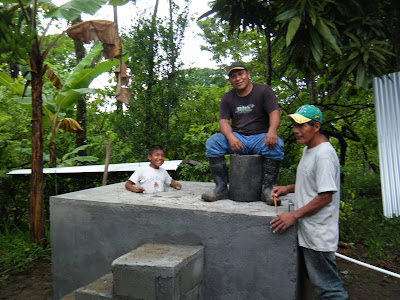
Plaster the outside walls, make stairs, and plaster the seats over the holes in the cement floor. Connect tubes that lead outside for the urine,and plaster in the doors on the back wall (out of which you will eventually take the compost).

More pictures coming soon! For further reading, my friend Louis wrote
an insightful post about the challenges of working with these latrines and the conflicts volunteers face in deciding whether we ought to promote them. They are not the solution for everyone, and require a lot of prep work and education before a project is pursued. The 12 families who will be receiving the composting latrine chose them over the pit latrine, and were required to meet several pre-requisites in order to demonstrate their understanding and genuine interest. Louis's retro-fitted bidet accessory is something I plan to offer as an option and will eliminate one of the biggest barriers to latrine use (wipe vs. wash).


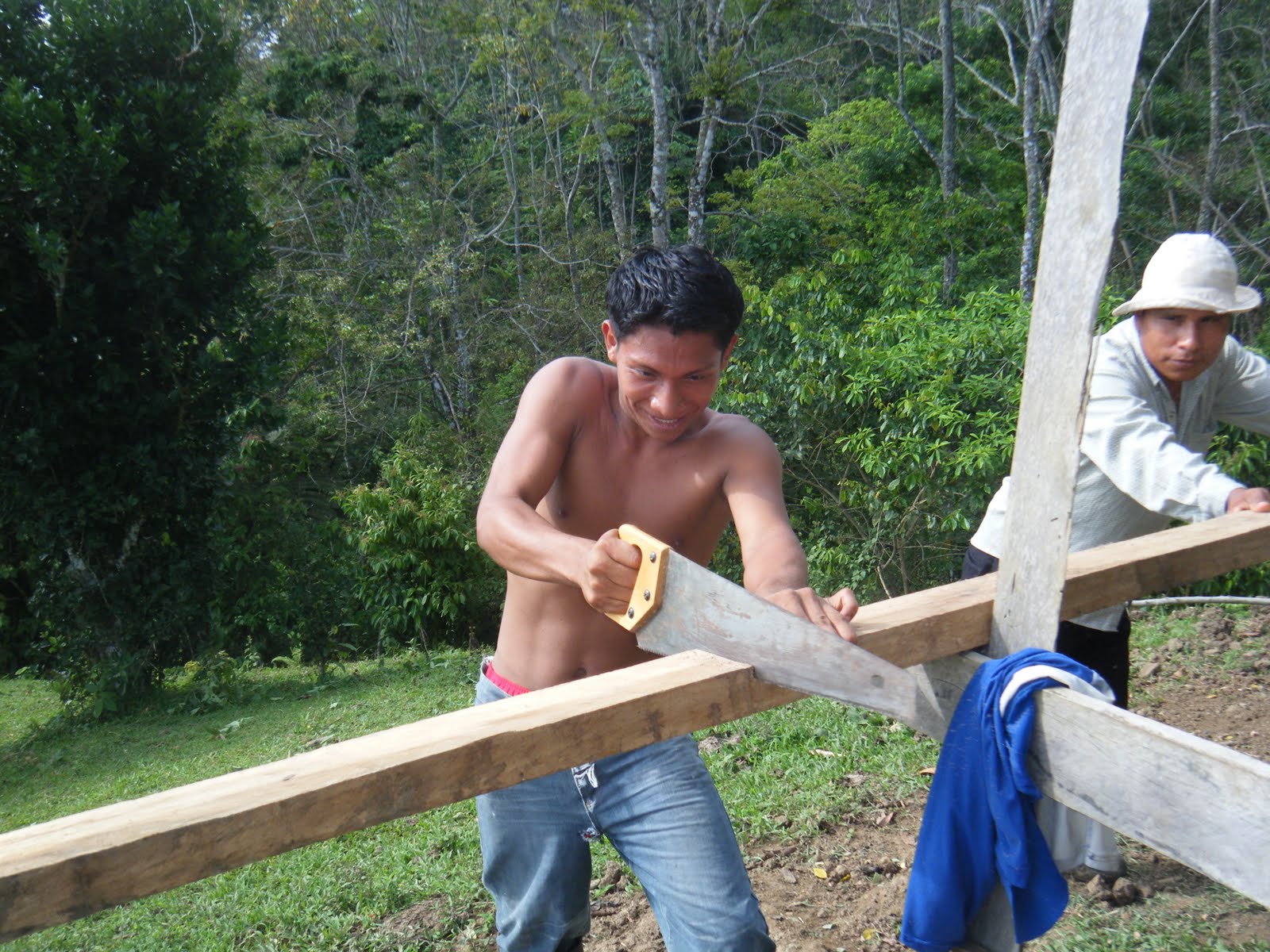




 Step 3: Make wooden table to support cement floor which will be thrown on top. Tie up some rebar for support. Below, a man shaves a few inches off a too-wide board. Again, you gotta love these handy men.
 Plaster the outside walls, make stairs, and plaster the seats over the holes in the cement floor. Connect tubes that lead outside for the urine,and plaster in the doors on the back wall (out of which you will eventually take the compost).

