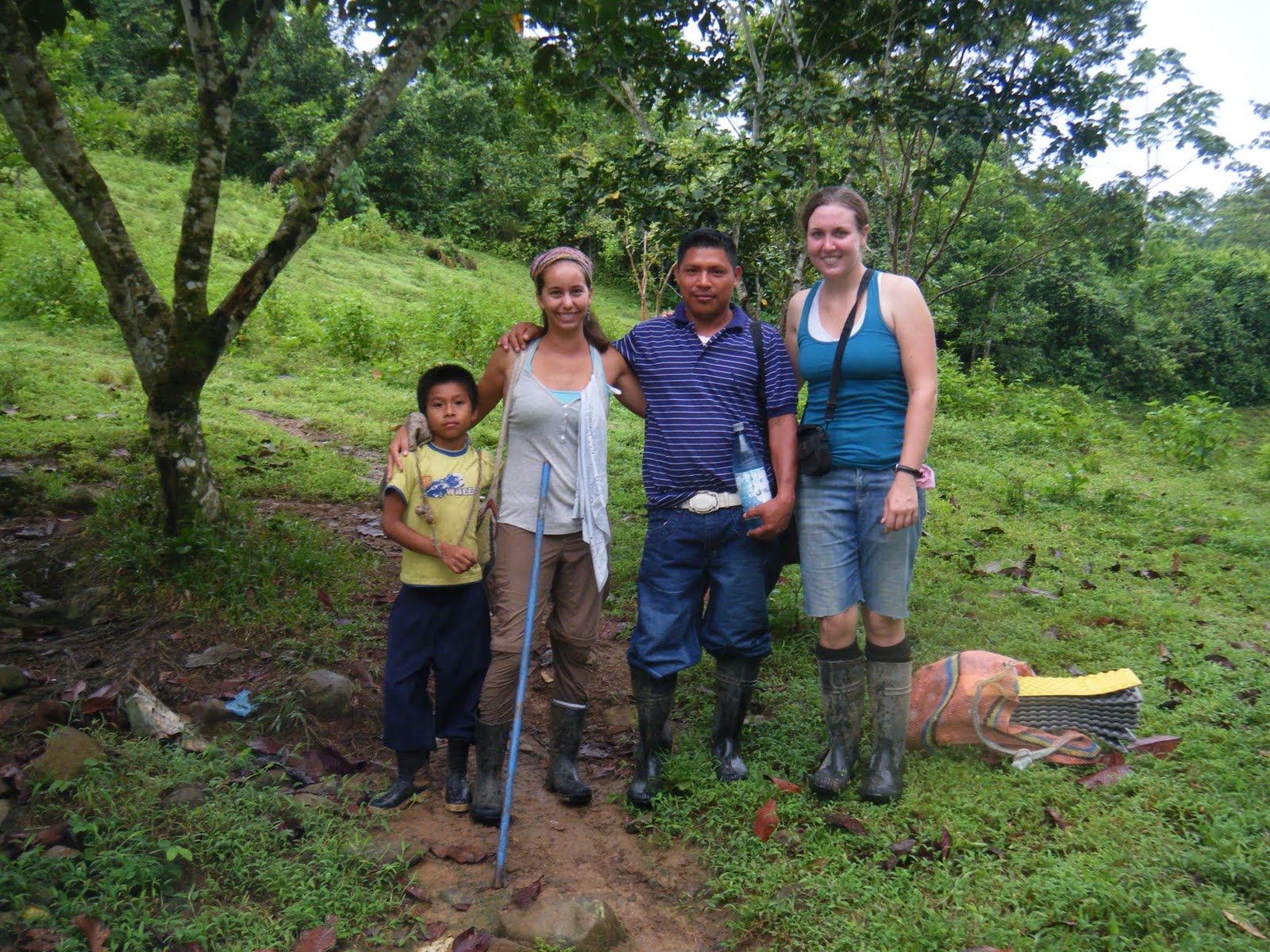
You may remember that last fall, I purchased a piglet for $25. I did this with the carnivorous intention of raising him 'til he was big and fat, and then killing him for my despedida. Goodbye parties are a big tradition in Panama, and I wanted to make sure there would be enough food to feed the flocks. Plus, it was a good conversation topic. People found it hilarious that I owned livestock and enjoyed asking me how fat he was getting. His name was well-known around town. Puerco de Paz means Peace Pig and is a play on the words for Peace Corps in Spanish, which is Cuerpo de Paz. It was impossible to mention him without grinning just a little.
Purchasing this piggy was perhaps one of the best decisions of my life. The day before my despedida, he was brought down from his house on the hill and my neighbors and BFF's Julio and Rosita took charge of the subsequent slaughter and preparation. Good thing, because when initially face-to-face with the 80-pound hog, I got cold feet and contemplated going into town to buy chicken. I learned a lot of things in Panama, but Intro to Butchery is a course I missed.
The plan was to smoke him that night, and the next day prepare a barbeque sauce, reheat and serve. I purchased some screen and, using tall stakes, we set up a grill of sorts, perched high above Rosita's cooking fire. Over the next eight hours, we smoked two batches of pork, and oh my goodness, did it taste good. The guilt I had over watching my baby get killed in cold blood slid away as the smoky smells of his roasting flesh filled the air. Yummo!
We attracted quite the crowd. Other neighbors and passersby seemed delighted by watching me rotate the meat over the smoky fire, and covering it back up with banana leaves. They said a lot of things like,
"Oh, look at Cati with all of that pork! She's crying from the smoke! What a great memory this is!"
And it was. Julio, Rosita, the kids and I stayed up until one o'clock in the morning smoking my dear puerco to perfection, all the while telling stories and jokes and enjoying each other's company. That night, I returned to the house with two five-gallon buckets filled with food.
In the morning, I prepared a barbeque sauce. I wanted to share something American in terms of cuisine at my despedida, but sometimes people scare easily when it comes to new, bold flavors, so I tried to keep it simple. The recipe was this:
1 part vinegar
1 part water
1 part ketchup
1 part sugar
Then I threw in some paprika, chili powder and a bit of bbq seasoning. That afternoon, we re-heated the meat in huge pots, threw on some sauce, and served it up with some rice and yucca. It was a hit.
I documented each step of the pig's demise, but I understand that some people might not want to be assaulted with such violent imagery. Therefore, follow this link if you want to see.
Showing posts with label pictures. Show all posts
Showing posts with label pictures. Show all posts
Friday, October 28, 2011

Tuesday, September 13, 2011
Bathing


Wednesday, August 24, 2011
On paseo
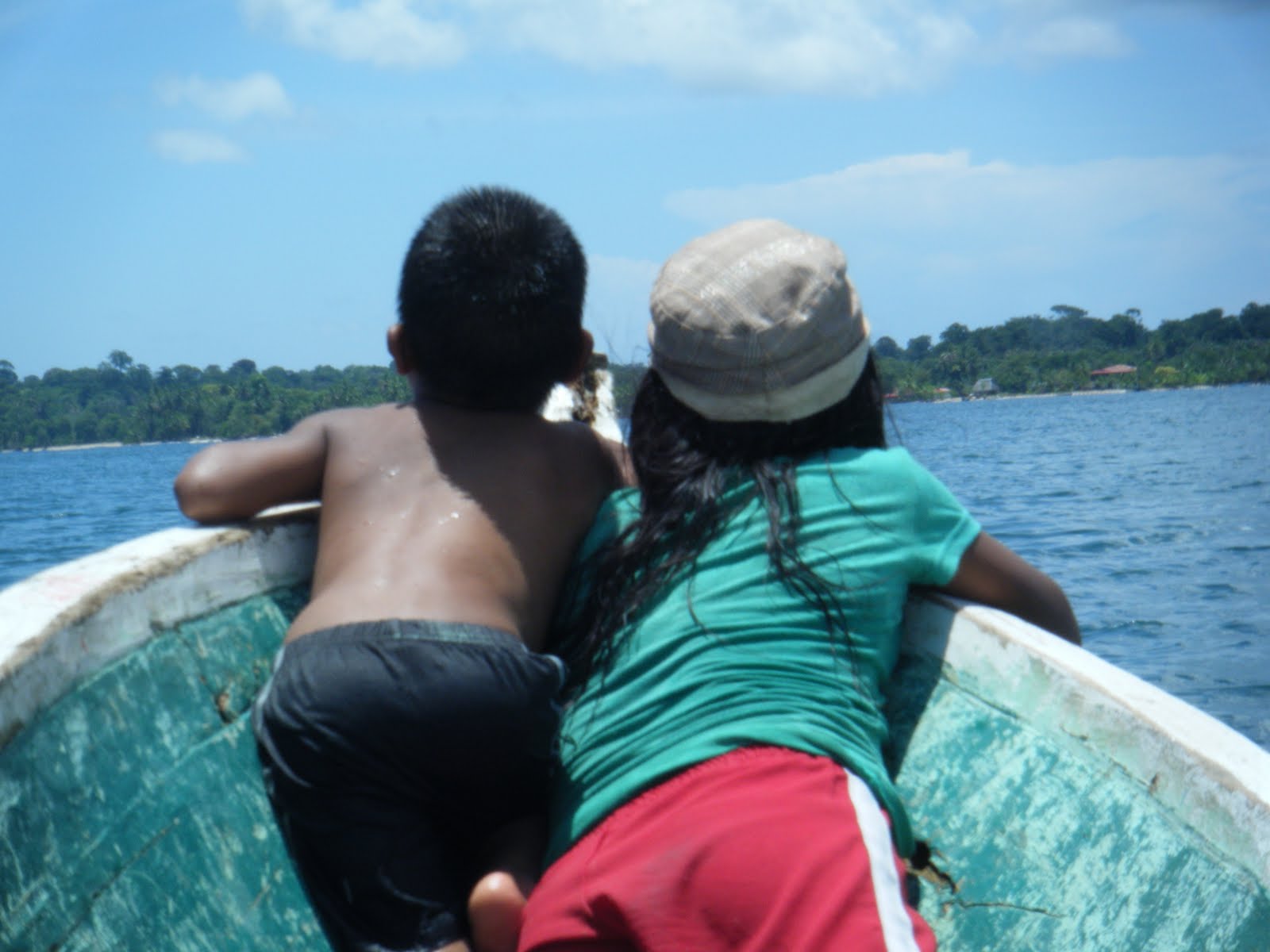
Last Saturday I went on on a trip with a friend from QP and his three kids. My neighbor Pcv Elsie came along and we made a day of fishing and then heading to the beach in a dugout canoe with a motor on back. Pictures:



Sunday, June 19, 2011
Water
PCV Michelle recently finished a huge water project that included many houses in her community, and several others in three other towns. Quebrada Pastor was lucky enough to receive three 300-galllon rainwater tanks bought with funds from her project. A few months ago, when Michelle offered the materials to me, she asked if I had some families in mind. It worked out that there were three in particular who had spoken to me many times about their struggles with water and wanted to figure out what we could do. They all lived far out of reach of the community´s aqueduct, and two of them drank out of a contaminated spring in which they also bathed and washed clothes. Worm infections were common among the families, and on more than one occasion, they had found a dead animal upstream from where they collected water. The third family lived in another remote part of town, and the spring they used often dried up in the summer. The family often packed up and stayed at their grandmother´s house because there was no other source of water nearby.
Michelle came by last week to help with the tank installations. You can read about her project here. Many thanks to her and the project´s donors for providing an essential resource to three families in QP.


Michelle came by last week to help with the tank installations. You can read about her project here. Many thanks to her and the project´s donors for providing an essential resource to three families in QP.
Latrine project continues
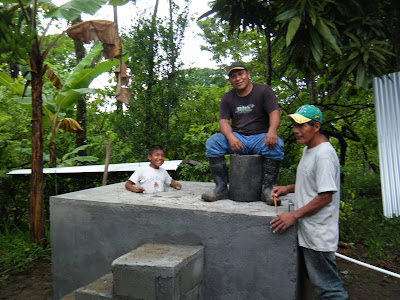
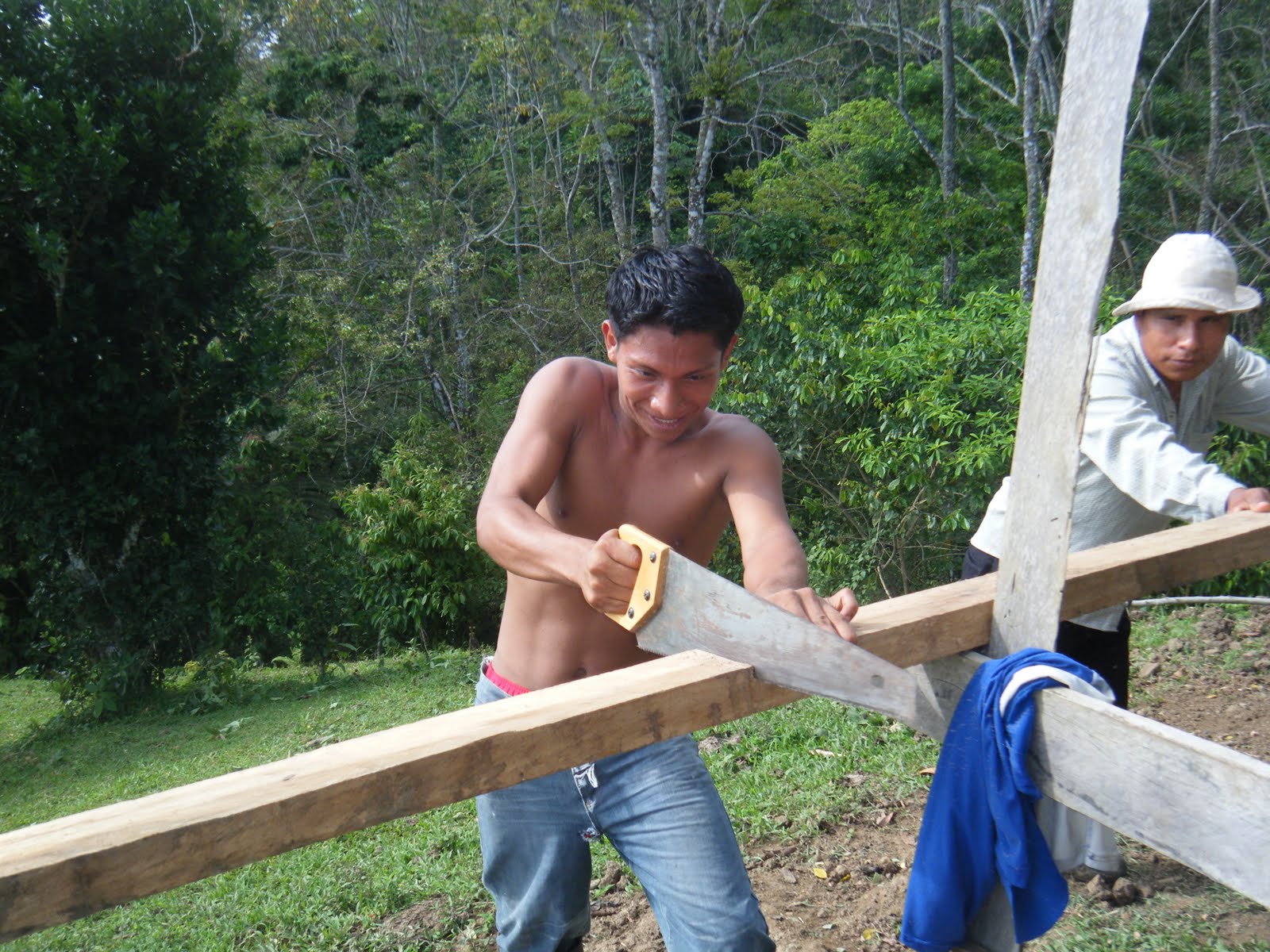
We have reached the downhill slope with regards to the latrine project. We only have about 3 composters and 7 pit latrines to go. It has been a professionally and physically challenging time for me, but it has been the most rewarding part of my service so far watching men transform from not wanting to pick up tools they didn't know the name for, to being able to carry out most of the construction by themselves. And after spending so much time working so closely, my relationship with the workers has become much closer. Work days are filled with jokes, laughs, and openly expressed anxieties about what they will do with themselves when I leave. I feel happy about what they have been able to accomplish and learn throughout the process about initiative, responsibility, and the realities of executing a project like this. Here are some photos of what we´ve been up to.





When they´re not in school...
I make my neighbors participate in American history re-enactments. On this day´s schedule: The Oregon trail! Westward expansion! Sod houses and fur trapping!

Just kidding. These are church dresses their dad made for them. But they look about as thrilled to have them on as they would be to be clearing wagon trails during a winter storm.
Saturday, April 23, 2011
How to build a composting latrine
Construction has been underway for about three weeks in Quebrada Pastor. Here are some pictures that might give you all a better idea of how the building goes and how much work it entails. A refresher: a composting latrine is a good alternatative to the traditional pit latrine. It includes two chambers, with only one used being used at any given time. Urine is diverted through tubes out the side of the latrine to keep the contents of the box try, and after every "deposit," a dry material like saw dust or ash is thrown on top to eliminate odor and aid in the compost process. When one side fills, it is left for up to a year to convert into rich soil. Depending on how fast you work, construction takes between 3 and 5 days. Here is some of what it entails.
Step one: Throw a concrete floor.

Step 2: Make the walls and dividing wall with four levels of block. This is the day that is the most technical, and usually intimidates the workers the most. But once they get going, they really love it and always joke about all the masonry jobs they can get as a result of the new skill.
 Step 3: Make wooden table to support cement floor which will be thrown on top. Tie up some rebar for support. Below, a man shaves a few inches off a too-wide board. Again, you gotta love these handy men.

 Plaster the outside walls, make stairs, and plaster the seats over the holes in the cement floor. Connect tubes that lead outside for the urine,and plaster in the doors on the back wall (out of which you will eventually take the compost).

More pictures coming soon! For further reading, my friend Louis wrote an insightful post about the challenges of working with these latrines and the conflicts volunteers face in deciding whether we ought to promote them. They are not the solution for everyone, and require a lot of prep work and education before a project is pursued. The 12 families who will be receiving the composting latrine chose them over the pit latrine, and were required to meet several pre-requisites in order to demonstrate their understanding and genuine interest. Louis's retro-fitted bidet accessory is something I plan to offer as an option and will eliminate one of the biggest barriers to latrine use (wipe vs. wash).
Step one: Throw a concrete floor.

Step 2: Make the walls and dividing wall with four levels of block. This is the day that is the most technical, and usually intimidates the workers the most. But once they get going, they really love it and always joke about all the masonry jobs they can get as a result of the new skill.
 Step 3: Make wooden table to support cement floor which will be thrown on top. Tie up some rebar for support. Below, a man shaves a few inches off a too-wide board. Again, you gotta love these handy men.
 Plaster the outside walls, make stairs, and plaster the seats over the holes in the cement floor. Connect tubes that lead outside for the urine,and plaster in the doors on the back wall (out of which you will eventually take the compost).
More pictures coming soon! For further reading, my friend Louis wrote an insightful post about the challenges of working with these latrines and the conflicts volunteers face in deciding whether we ought to promote them. They are not the solution for everyone, and require a lot of prep work and education before a project is pursued. The 12 families who will be receiving the composting latrine chose them over the pit latrine, and were required to meet several pre-requisites in order to demonstrate their understanding and genuine interest. Louis's retro-fitted bidet accessory is something I plan to offer as an option and will eliminate one of the biggest barriers to latrine use (wipe vs. wash).
Sunday, April 10, 2011
Supermen
PCV Michelle recently wrote a funny post about how unrealistic her expectations for men will be after living here in Panama. The men we live with are freakishly strong, can work all day in hot sun without water or food, and are ridiculously handy at fixing everything with literally no tools at their disposal. It´s been a while, but I don´t remember men in the U.S. being able to do anything but play fantasy football and flirt with women on facebook instead of in real life. I am going to be so disappointed when I go back. What do you mean you can´t cut perfect 2x4´s with just a chain saw? And I don´t understand why you need a lawn mower. A machete works just as well, and it makes your arms look amazing.


Last week we began construction on the first composting latrine. We had ordered wooden floats to use on the cement floors, but the hardware store didn´t have any. My host-dad Angel saw my face knitting itself into fretful worry, and he said ¨Oh, it´s fine, Cati. I´ll just make some.¨ He sat down in the shade of a tree, grabbed some wood scraps and the essential Panama multi-tool, his machete. Within half an hour, he produced two of these:
Saturday, March 26, 2011
Stove project and Panama Verde
As I wrote last February, I have been working on re-forming the Panama Verde youth group that I was ready to leave in tatters at the end of last year. I am glad I didn´t because I see that the group means something to the few young people who are involved and have been pleased by the dedication and motivation of two new members. In Febraury and March we held bake sales to raise money to help support a stove project.
PCV Michelle recently alerted us about a new model of stove, called the Bliss Burner, invented in part by Steve Bliss, a humanitarian worker based in Panama. This stove is a simple design, and an improvement on the other model I´d been considering last year. The two are compared side-by-side at the Deadwheat Foundation´s blog.
The prefered means of cooking in my community is on a three-rock stove, which basically amounts to a camp fire, which is often in someone´s kitchen, in their home. It releases incredible amounts of smoke, I usually can´t stand to be near one, and makes preparing a meal hellishly hot for the cook. The Bliss Burner burns more efficiently, releases very little smoke, and requires a lot less firewood. Its benefits are two-fold-- reducing deforestation and improving air quality, and thereby health.
I met Steve recently and wanted to get a stove built in my site and see how my Panama Verde group felt about taking this on as a project. Steve´s wife Jennifer came by this week and build a model stove at my neighbors house. It involves a 2:1 mix of clay, sand, and 1/3 bag cement. The mix is put in a mold, left for five hours, and the finished stove is ready to pop out.
It occured to me before the team got there, I didn´t have a screen to sift out the rocks. That´s okay, that is what sassy five-year-olds are for! She went at this for well over an hour before politely asking me to inspect her work. Shortly after, the team arrived with a sifter. Sorry Rosibel!


I rushed over to their house early this morning to snap a photo of the finished product, hence the grumpy faces. Julio is going to make a new surface for the stove to sit on
People have responded very positively already to the idea of these stoves. Several people came by yesterday to watch us make it. The cost to make one is very low and the benefits high. The youth group and I plan to continue make them on a house-by-house basis, charging for materials and an extra dollar or two to fundraise for a future group trip or activity.
People have responded very positively already to the idea of these stoves. Several people came by yesterday to watch us make it. The cost to make one is very low and the benefits high. The youth group and I plan to continue make them on a house-by-house basis, charging for materials and an extra dollar or two to fundraise for a future group trip or activity.
Small-scale health promotion
As PCVs we are always thinking about new ways to acheive our goals. Get people to wash their hands more often. How to encourage them to care about water contamination. To take steps to prevent disease transmission.
Here are a couple of simple ideas I´ve been spreading around. I wish I had started sooner, because people are responding really positively. Fellow PCV Louis told me about the success he´s been having with Tippy Taps, which are hands-free hand-washing stations. They conserve water, make hand-washing convenient, and what´s more, fun! In my community, kids have been the real change agents in adopting these, but the adults are coming around too, once they saw that it costs nothing and that this method can help keep their family´s water cleaner. Current hand washing methods involve dipping a cup into a bucket of water, pouring the water over your hands and trying to wash that way, then sticking the contaminated cup back over and over. For this reason and others, most people, don´t do it so often. Here is what the tippy tap looks like:

Education about hand washing is one thing. Behavior change is another. I think the Tippy Tap removes many of the barriers to action that existed before and is a great way to encourage families. And the couple of hours it takes to assemble everything allows me to sneak in a few tips and pieces of information in a non-formal environment where people are more likely to listen and engage.
I have also been working on improving the faucet-in-bucket design. Everyone stores water in buckets, and sometimes leave them untapped, or acts carelessly with regard to contaminating the water inside. Using dipping cups to get water out for drinks, plate and hand washing and other tasks makes the water dirty awfully fast. Amoebas, giardia, worms, and bacteria can thrive. I have explained to families interested in the bucket how to chlorinate their water, and then tap the bucket and only take water out of it through the faucet. People are a lot more open to chlorinating their water than when I first got here and many people have shown a lot of interest and understanding reagarding water contamination at the household level.
The more time I spend in my community, the more clout and confianza I have with the people. In recent months, I have noticed them latching on a little more willingly to my ideas and showing more initiative with regard to asking for my help. I have improved the leakage problem with the buckets by placing two small pieces of plastic between the wall and the nut that fastens the faucet in place. I am going to continue working to streamline the process before showing a community counterpart how to do it (they currently regard me as a magician). When things go poorly or are difficult, people can get negative and write things off really fast. The method needs to be quick and easy, and I want to make sure it´s just right before unveiling the tricks behind the magic show.

Here are a couple of simple ideas I´ve been spreading around. I wish I had started sooner, because people are responding really positively. Fellow PCV Louis told me about the success he´s been having with Tippy Taps, which are hands-free hand-washing stations. They conserve water, make hand-washing convenient, and what´s more, fun! In my community, kids have been the real change agents in adopting these, but the adults are coming around too, once they saw that it costs nothing and that this method can help keep their family´s water cleaner. Current hand washing methods involve dipping a cup into a bucket of water, pouring the water over your hands and trying to wash that way, then sticking the contaminated cup back over and over. For this reason and others, most people, don´t do it so often. Here is what the tippy tap looks like:
You use the foot pedal to pull the jug forward, and the water spouts out of a small hole made a few inches beneath the cap. Rain-guard soap dish made out of sardine and tuna cans hangs to the left.
Education about hand washing is one thing. Behavior change is another. I think the Tippy Tap removes many of the barriers to action that existed before and is a great way to encourage families. And the couple of hours it takes to assemble everything allows me to sneak in a few tips and pieces of information in a non-formal environment where people are more likely to listen and engage.
I have also been working on improving the faucet-in-bucket design. Everyone stores water in buckets, and sometimes leave them untapped, or acts carelessly with regard to contaminating the water inside. Using dipping cups to get water out for drinks, plate and hand washing and other tasks makes the water dirty awfully fast. Amoebas, giardia, worms, and bacteria can thrive. I have explained to families interested in the bucket how to chlorinate their water, and then tap the bucket and only take water out of it through the faucet. People are a lot more open to chlorinating their water than when I first got here and many people have shown a lot of interest and understanding reagarding water contamination at the household level.
The more time I spend in my community, the more clout and confianza I have with the people. In recent months, I have noticed them latching on a little more willingly to my ideas and showing more initiative with regard to asking for my help. I have improved the leakage problem with the buckets by placing two small pieces of plastic between the wall and the nut that fastens the faucet in place. I am going to continue working to streamline the process before showing a community counterpart how to do it (they currently regard me as a magician). When things go poorly or are difficult, people can get negative and write things off really fast. The method needs to be quick and easy, and I want to make sure it´s just right before unveiling the tricks behind the magic show.
the face of a happy and crazed inventor
James´ visit
My brother James is a really good sport. He arrived in Las Tablas after a long day of travel and was immediately immersed into the 24-7 chaos that is Panama´s Carnaval. It is quite like Mardis Gras, but involves a lot more hoses spraying people, beauty queen parade floats, and pop-up clubs in which one is free to dance the night away. He jumped right in to the fiesta without a complaint. He met a bunch of my Peace Corps friends, all enjoying a couple of vacation days, and soaking in the sun, pushing through crowds, and subsisting on what we all lovingly call street meat.
From there, we spent a four full days in my site. He got to know the local kids really well and get a real taste of what a normal day for a PCV is like. There aren´t many people I feel like I could bring into my community and not feel worried about how they would do or view things. But James is one of those people I knew who could handle it and thrive, just like he did at Carnaval! The kids fell in love, and many of the adults told me they thought he would make a really good volunteer and asked about his availability come October, when I leave. I said our mother wouldn´t have it.
We finished our time on Bocas Island, eating bacon, burgers, and really good Indian food. I told James the only condition for his visit was that he had to write me an entry for the blog. That will be coming soon. In the mean time, here are all the pictures from his visit.
From there, we spent a four full days in my site. He got to know the local kids really well and get a real taste of what a normal day for a PCV is like. There aren´t many people I feel like I could bring into my community and not feel worried about how they would do or view things. But James is one of those people I knew who could handle it and thrive, just like he did at Carnaval! The kids fell in love, and many of the adults told me they thought he would make a really good volunteer and asked about his availability come October, when I leave. I said our mother wouldn´t have it.
We finished our time on Bocas Island, eating bacon, burgers, and really good Indian food. I told James the only condition for his visit was that he had to write me an entry for the blog. That will be coming soon. In the mean time, here are all the pictures from his visit.
Wednesday, January 12, 2011
Where your chocolate comes from
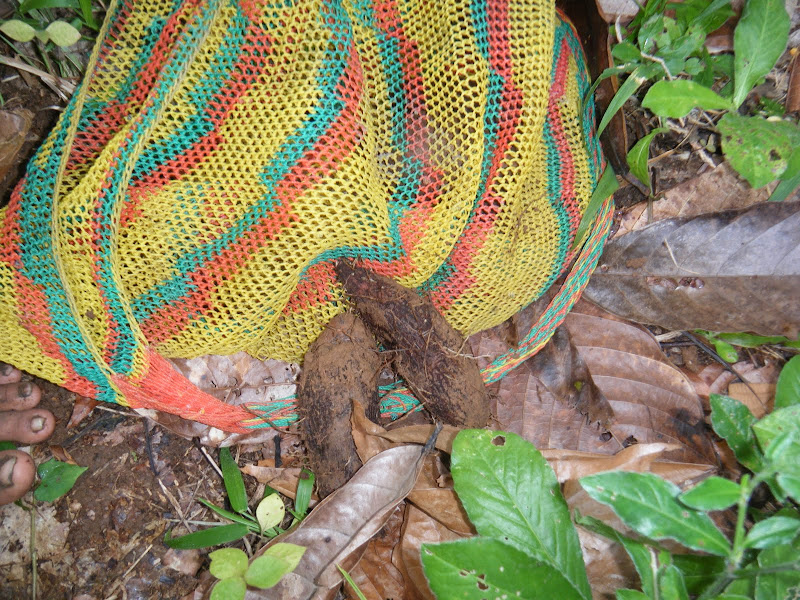
Saturday was a day in the finca. I went with a family an hour into the hills to take out the beans from some cocoa pods they had harvested. Here are some pictures:
The beans which had been cut from the trees a few days earlier and left in a pile:
Vanesa and A bed of banana leaves to throw the beans onto:
The pods are cut open with machetes and the beans are taken out by hand. The white jelly is sweet and can be eaten; it is later removed during a days-long fermenting process. What remains are the almond-sized cocoa beans.
It only took about an hour to get all the beans out. but someone needed a break.
Digging up some root vegetables before heading home.
The beans which had been cut from the trees a few days earlier and left in a pile:
 |
| From 2011-01-12 |
Vanesa and A bed of banana leaves to throw the beans onto:
 |
| From 2011-01-12 |
The pods are cut open with machetes and the beans are taken out by hand. The white jelly is sweet and can be eaten; it is later removed during a days-long fermenting process. What remains are the almond-sized cocoa beans.
 |
| From 2011-01-12 |
It only took about an hour to get all the beans out. but someone needed a break.
 |
| From 2011-01-12 |
Digging up some root vegetables before heading home.
 |
| From 2011-01-12 |
 |
| From 2011-01-12 |
Thursday, September 23, 2010
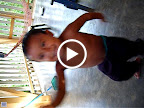
When was the last time you felt so free?
This kid is mischievous, but he´s always blowing me kisses and yelling ¨Cuidate, Cati!¨ Take care of yourself! So I can´t hold a grudge, plus, he´s got some killer moves.
Click on it to view. I wish I knew how to rotate videos. Sorry if you get a neck cramp. I uploaded a ton of other photos too, so take a look.
 |
| From Panama Pura Vida |
Click on it to view. I wish I knew how to rotate videos. Sorry if you get a neck cramp. I uploaded a ton of other photos too, so take a look.
 |
| Panama Pura Vida |
Off to Camp
Months ago, the Bocas coordinator of Panama Verde mentioned to me that she was planning a camp for local groups in a nearby community. I didn´t hear another word about it until a couple of weeks ago, when she arrived at my doorstep on a Wednesday afternoon. She said she had been trying to contact me for days, and I wasn´t answering my email. (Imagine!! The QP wireless must have been out...) Six spots were available for my kids, and the camp started that Friday.
I was miffed at the group because they all stood me up for a community clean-up day that very morning (in their defense, it was raining...), but I couldn´t let them miss this opportunity. I scrambled to print permission slips, track down the kids and gently coax them into three-days and two-nights away. The girls needed a lot less convincing. Two of them became so excited during my description of the camp, they began stroking my stomach and saying ¨I´ll go, Cati!! I´ll go!¨ We were only going 30 minutes down the road to another Ngobe community, but apprehensions among the rest were still simmering at a medium-high heat. Somehow we all arrived safe and sound, and by the time I had to leave them Friday eavening, they were giddy and busy making new friends.
Practicing Leadership and Teamwork in Ropes Courses:

Our Group Became Official and took the Panama Verde oath:
Translation: I swear to love, respect, and care for nature, which gives us sustinence to live, and I promise to do my small part, together with others, to make a big difference.
Saturday, groups did clean-ups and mural paintings in public parks. Unfortunately, I had to miss it because I had other commitments in QP.
In between, they listened to talks about conservation, project ideas, and leadership. On Sunday, they were all presented with certificates, a sure-to-please staple of Panamanian cermony.
On Sunday, in sweltering heat, we boarded a bus that dropped us back off in QP. I thought the kids would be in a hurry to get home, but as we stepped off the bus, all of a sudden they were REALLY.EXCITED.AGAIN. They wanted to go back to my house to ¨debrief.¨ I sat awestruck as they animatedly recounted every moment, all the activities, songs sung, and lessons learned.
A fellow PCV recently made the comment that he´glad I like to do youth development work, beacuse he is much more results-oriented, and likes to see something tangible come of his work. In my experience, I have have been much more satisfied in my work with kids than adults. They seem to genuinely appreciate the efforts I make and value the intangibles-- leadership, communication skills, teamwork and community involvement. Most adults are less appreciative of the education I have offered, and only view progress as something to be seen-- infrastructure in the form of latrines, aqueducts, buildings, whatever. But these things have little value if the people lack the knowledge and initiative to do the work themselves. This is the second time I´ve taken kids out of the community for a camp (I wrote about the other time here.), and watching the quietest one emerge as leaders and dive into new experiences with complete willingness to learn and participate feels an awful lot like real progress to me.

I was miffed at the group because they all stood me up for a community clean-up day that very morning (in their defense, it was raining...), but I couldn´t let them miss this opportunity. I scrambled to print permission slips, track down the kids and gently coax them into three-days and two-nights away. The girls needed a lot less convincing. Two of them became so excited during my description of the camp, they began stroking my stomach and saying ¨I´ll go, Cati!! I´ll go!¨ We were only going 30 minutes down the road to another Ngobe community, but apprehensions among the rest were still simmering at a medium-high heat. Somehow we all arrived safe and sound, and by the time I had to leave them Friday eavening, they were giddy and busy making new friends.


Practicing Leadership and Teamwork in Ropes Courses:

Our Group Became Official and took the Panama Verde oath:
Translation: I swear to love, respect, and care for nature, which gives us sustinence to live, and I promise to do my small part, together with others, to make a big difference.
Saturday, groups did clean-ups and mural paintings in public parks. Unfortunately, I had to miss it because I had other commitments in QP.
In between, they listened to talks about conservation, project ideas, and leadership. On Sunday, they were all presented with certificates, a sure-to-please staple of Panamanian cermony.
On Sunday, in sweltering heat, we boarded a bus that dropped us back off in QP. I thought the kids would be in a hurry to get home, but as we stepped off the bus, all of a sudden they were REALLY.EXCITED.AGAIN. They wanted to go back to my house to ¨debrief.¨ I sat awestruck as they animatedly recounted every moment, all the activities, songs sung, and lessons learned.
A fellow PCV recently made the comment that he´glad I like to do youth development work, beacuse he is much more results-oriented, and likes to see something tangible come of his work. In my experience, I have have been much more satisfied in my work with kids than adults. They seem to genuinely appreciate the efforts I make and value the intangibles-- leadership, communication skills, teamwork and community involvement. Most adults are less appreciative of the education I have offered, and only view progress as something to be seen-- infrastructure in the form of latrines, aqueducts, buildings, whatever. But these things have little value if the people lack the knowledge and initiative to do the work themselves. This is the second time I´ve taken kids out of the community for a camp (I wrote about the other time here.), and watching the quietest one emerge as leaders and dive into new experiences with complete willingness to learn and participate feels an awful lot like real progress to me.

Subscribe to:
Posts (Atom)