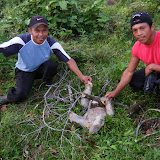
 Seriously, guys, do you have any idea how LONG IT TAKES ME to upload these pictures? You are lucky my heart is full of gold and love and drive to please you. Here are 35 new pics of jungle animals, Ngobe babies, and my belly button! Now you have to click!
Monday, May 3, 2010
Panama Part Two
Seriously, guys, do you have any idea how LONG IT TAKES ME to upload these pictures? You are lucky my heart is full of gold and love and drive to please you. Here are 35 new pics of jungle animals, Ngobe babies, and my belly button! Now you have to click!

Sunday, May 2, 2010
Not exactly the 9-5 Dolly was singing about
I am in David today and tomorrow, doing a lot of work on the computer that I haven´t had time to take care of earlier. That, and I hadn´t taken a ¨personal day¨out of site since vacation in March, and I found myself getting grumpy with some of my near and dear community members. When I get grumpy, I know it´s time for a time out. I think I just needed some ice cream.

So anyway, the end of April was busy, and May is shaping up to look like more of the same. Here´s a summary of what I´ve been up to.
1. On the latrine front: Last Monday, my latrine committee and I met with a representative from ANAM, the government´s environmental agency, to complete a community diagnostic activity. It is the first of several steps we will complete in order to plan our latrine project and obtain funds. ANAM itself won´t provide them, but our contact with this agency can help us obtain money from another, or a private donor, and the documents we complete with them can be used as jumping-off points for future projects. They were incredibly pleased with the committee, and said they did a great job participating. This of course made all my community members beam with pride, and many of them came to talk to me afterward to see if I agreed that yes, they did a great job! I also invited a representative from the Ministry of Health (MINSA), who was very helpful and enthusiastic.
Our next step from here involves filling out a detailed project plan, which I will do over the course of several weeks with my counterpart at ANAM´s office in Changuinola. I would like to involve the rest of the committee members in this process as much as possible, but I´m still thinking about how I can best do that.
2. On the water front: My latrine committee held its ¨elections¨ on Friday, and I came to brief them first with a charla about the roles and responsibilities of each member of the board. It went well, and they seemed grateful for the information. It seem the President has given the laws that the committee must follow no more than a cursory glance, and everyone was prepared to vote for and fill positions they weren´t entirely sure about.
The biggest obstacle I have had in working with my water committee has been that the group is extremely dysfunctional. They have all of these internal issues, grudges, family histories, gossip, whatever, that prevents them from communicating, working as a team, or well, working at all. I also presented a few notes on the virtues and vices of good team work, and tried to offer some motivation for the future. After having just completed six months in service, only now are the members starting to tell me the true past of the aqueduct committee, and everyone´s story is different. The common themes are: corruption, selfishness, rule-breaking, lack of responsibility.
The other obstacle I have been met with is that, until recently, no one seemed willing to work on the problems. But sometimes you just have to give people time. After months of gentle, and sometimes, not-so-gentle prodding, the President and the Vice President seem more willing to listen to what I have to say and the charlas, trainings, and work days that I have offered. They see now that neither the committee nor the water system is functioning as it should. The biggest problems I have seen since arriving here in Panama among water commitees are people issues, organization, motivation, or conflict issues. The technical stuff is easy once you have a strong team. Now I just have to get them to believe me.
3. The kids: A few weeks ago, I went around to the 7th, 8th, and 9th grades to talk about Panama Verde. It is an environmental group that was founded by a Peace Corps volunteer, but is now managed on a national level by Panamanians. It promotes conservation projects and the development of leadership skills among youth with equal emphasis.
In my community, all of our biggest creeks run directly to the ocean. They are contaminated with chemicals, trash, and human excrement. Candy, cookie and food wrappers litter the ground. People burn trash-laden with plastics, and the breeze blows it all back into their house. Most families cook on fogons in their houses, which are essentially indoor campfires which use use copiuous amounts of firewood (deforestation). The thick, black smoke blows right back at them. The lungs of all of my neighbor´s children rattle. (I am hoping that my group will be interested in a stove project I plan to suggest... more coming on this) Obviously there are dozens of opportunities for environmental education and projects in my QP. Panama Verde empowers the jovenes (youth-ish 12-25) to take it on themselves. I am a counselor for the group. I give them ideas, help them fundraise, teach them through charlas, activities, and games, but they also form their own governing board (directiva), and take on more and more as time goes on. One group that was started by a Peace Corps volunteer a few years ago in a neighboring town is now run entirely by the jovenes without any help from adults.
That for me is the most exciting part. The development of self-esteem, problem-solving, and leadership skills. These kids have very few opportunities for that, and in fact, have very few opportunities to just hang out and be kids. If they are not in school, they are working in the finca or taking care of younger siblings. Panama Verde is a real opportunity for them to think about personal development, all while helping out their community.
I had a list of 73 kids who said they wanted to participate. So, I invited the regional coordinator for Panama Verde to come and help me with a charla to explain more clearly what PV is and what sort of work we would do. I was hoping for a group of 10-15. That meeting was Saturday, and six students came. But, as the coordinator pointed out to me, those are the ones who really wanted to be there. And they seemed genuinely excited and dedicated. I plan to recruit a few more members, and we´ll have a swear-in at the end of May.
4. Project Management and Leadership (PML)! Peace Corps invites all of its volunteers to bring a counterpart to a PML conference after five months in site. I was unable to attend mine because I was held up in the clinic with that bothersome foot infection, but my counterpart did attend, and loved it. The conference focuses on the following themes: Identifying Personal Goals, Values, and Missions for Groups, Time and Money Management, Forming Effective Groups, Facilitating Group Interaction, Formal Letter Writing, and Interacting with Agencies.
The information seems fairly basic to us, but for many of the Panamanian or indigenous peoples we work with, PML might be the first time anyone told them to write down their appointments in an agenda, or that to offer someone positive re-inforcement is better than negative, or even how keeping close track of your monthly expenses can help you save money. The ideas are simple, but many have never had opportunities to properly learn and practice them. Many of the counterparts get a lot out of it, some of it is over their heads, but at the very least, it is a reward away from the communities, and a chance for them to feel special. The idea is that they can help their PCV present these concepts in their communities at a later date.
Enter Cati! I am bringing PML to QP this month, condensing three days of material into two, and presenting it all with the help of three other volunteer friends. I invited all the members of my latrine and water committees, and so far, everyone seems willing to come. I typed up formal letter invitations and hand-delivered each. I think this helped, they respect a formal letter. I am trying to obtain some donations of materials from a local bookstore in Changuinola, and will be busy prepping the materials in the coming weeks. I am super excited to work with my counterpart Lucas and my committees in a new capacity, and one that will empower them and provide them with some legitimate tools to continue forward. And, it´s always good to bring in back-up volunteer reinforcements. (Three other people are saying what Cati is saying... maybe now I´ll consider it!)
5. Spent two days surveying for a new aqueduct system in a nearby PCV community. The tool we use to survey is a water level, which provides measurements that are much more accurate than a GPS or abney level or whatever other tools other professionals might use. Water levels have been used in various forms for centuries, and work on the principal that water always looks for its own level. Picture: a reservoir tank out of which exits a clear plastic tube which extends for 50 feet of length, and then another 10 feet up a straight pole, with a measuring tape attached. As you move along the terrain, you maintain the reservoir higher than the pole, and move from point to point. The water level gives you the change in altitude between the two points, and the marks you´ve made on the length of the tube tell you the distance. This, combined with measuring a source and doing basic population forecasting, are the first steps in planning for an aqueduct system. The water level is a PC favorite because it is something we can do with our community members, and helps them understand some of the basic principals of gravity-flow water systems.
So that´s what I´ve been up to.
The days we surveyed were HOT AS HADES, but it was fun to do some real dirty work, and the company of other PCVs is always appreciated. This is kind of a ridiculous pose I am striking but que va...
So on Tuesday, I am leaving for three days of aqueduct technical training in one of our group 64 volunteer´s sites. I am excited to see all of my EH folks again, since I felt robbed and socially-deprived after missing PML in March.
The Ngobe Cookbook Part Two
Many of you reacted with more horror than I was expecting the first time I shared some of the Ngobes´ favorite recipes. I just get used to things and I forget that maybe other people wouldn´t like to be served a bowl of boiled yucca with rice, boiled bananas, and noodles on top. Why? Because not everyone likes to eat three days worth of carbs in one sitting. Oh, I forgot.
I bring you this second edition, because lately my neighbors have been offering me a whole heck of a lot of food. I am not sure why this started up again, but I sort of wish it would stop, because as much as I appreciate their generosity in sharing what little they have, I know their own families need and enjoy it more.
THE BAD
Patitas-Chicken feet. If a family has chicken to eat, they´re doing pretty well. It means that day they had the money to buy something other than canned sardines or just eat the root vegetables in their finca. However, we must never forget that this is Panama and these people are poor, so the chicken they eat is of a different variety than what you or I might choose at home. Chicken feet cost 65 cents a pound, and when used to made a soup, they really do provide a nice, rich, chickeny flavor. But don´t rush out to your butcher just yet.
Because when it comes to actually eating the feet? That part is not fun. The texture of the dimply skin is fatty and rough, and if you get a mouthful of anything, it´s tendon or bone. No problem for the Ngobes, because they like to eat the bones, and good thing because I am quite sure that fish and chicken bones are their only true source of calcium.
Pescuezo- Chicken necks! An economic step up from the feet. These cost about 85 cents a pound, and on the back, they do have a little strip of meat. The rest of it, like the feet, is skin, tendon and vertabrae. Chicken necks have good flavor too, in theory, but would be better if just used for stock and removed. I always have to floss pieces of spine and marrow out of my teeth after eating these. Not pretty.
I always feel guilty when offered these two foods, because the Ngobes eat every last little bit, but I still can´t bring myself to chomp down with gusto on chicken spine. For them any kind of chicken is a special occasion, a good day. It reminds me how lucky I am that I have never been hungry enough to eat chicken bones, or to suck a chicken toe of the foot and nearly swallow it whole. I worry that I am showing them disrespect when I leave so much of what to them is good food left in my bowl. I do my best to eat as much as possible, but there are some habits a gringa just can´t break.
Chica de Maiz- Corn juice. Grind uncooked corn kernels, throw them in a big pot with water and cook until you have a thick, milky consistency. Add sugar if, Gracias a Dios (Thank God), you have some that day. The result is a slightly sour, rock heavy beverage that is served hot. It tastes like something that will make you really sick later on. It hasn´t actually yet made me ill, but if my neighbor offers me some at 8am, I am not hungry again til dinner. Sticks to your ribs.
THE AMAZING
Cacao- I live in chocolate country. It grows on trees. I buy it for 30 or 35 cents a ball, depending on my dealer. I say dealer because I am addicted. A ball yields probably between 8 or 10 servings. Grate into water, let it come to a boil, and steam for 10-15 minutes, add sugar. For super rich hot chocolate, do it with powdered milk, and allow yourself to experience the most incredible beverage on the planet. Also delicious served when left to cool in the pot. Chocolate milk!
Fried plantains- Oh my God. Slice super ripe plaintains. Fry in oil. My Ngobes don´t make these very much, they say maduros (ripe bananas or plantains) give them diarrhea. I think it is the idea that it has a flavor that is upsetting to them. But that´s fine, more for me. Can´t wait to make these back in the states and serve over ice cream. You gringos are going to freak out.
Arroz con Coco- Rice cooked with juice from inside a coconut (maybe 1/2 or 2/3 coconut, to 1/2 or 1/3 water). A carribean favorite and INCREDIBLE when served with fried fish. Thank God coconuts grow everywhere.
I bring you this second edition, because lately my neighbors have been offering me a whole heck of a lot of food. I am not sure why this started up again, but I sort of wish it would stop, because as much as I appreciate their generosity in sharing what little they have, I know their own families need and enjoy it more.
THE BAD
Patitas-Chicken feet. If a family has chicken to eat, they´re doing pretty well. It means that day they had the money to buy something other than canned sardines or just eat the root vegetables in their finca. However, we must never forget that this is Panama and these people are poor, so the chicken they eat is of a different variety than what you or I might choose at home. Chicken feet cost 65 cents a pound, and when used to made a soup, they really do provide a nice, rich, chickeny flavor. But don´t rush out to your butcher just yet.
Because when it comes to actually eating the feet? That part is not fun. The texture of the dimply skin is fatty and rough, and if you get a mouthful of anything, it´s tendon or bone. No problem for the Ngobes, because they like to eat the bones, and good thing because I am quite sure that fish and chicken bones are their only true source of calcium.
Pescuezo- Chicken necks! An economic step up from the feet. These cost about 85 cents a pound, and on the back, they do have a little strip of meat. The rest of it, like the feet, is skin, tendon and vertabrae. Chicken necks have good flavor too, in theory, but would be better if just used for stock and removed. I always have to floss pieces of spine and marrow out of my teeth after eating these. Not pretty.
I always feel guilty when offered these two foods, because the Ngobes eat every last little bit, but I still can´t bring myself to chomp down with gusto on chicken spine. For them any kind of chicken is a special occasion, a good day. It reminds me how lucky I am that I have never been hungry enough to eat chicken bones, or to suck a chicken toe of the foot and nearly swallow it whole. I worry that I am showing them disrespect when I leave so much of what to them is good food left in my bowl. I do my best to eat as much as possible, but there are some habits a gringa just can´t break.
Chica de Maiz- Corn juice. Grind uncooked corn kernels, throw them in a big pot with water and cook until you have a thick, milky consistency. Add sugar if, Gracias a Dios (Thank God), you have some that day. The result is a slightly sour, rock heavy beverage that is served hot. It tastes like something that will make you really sick later on. It hasn´t actually yet made me ill, but if my neighbor offers me some at 8am, I am not hungry again til dinner. Sticks to your ribs.
THE AMAZING
Cacao- I live in chocolate country. It grows on trees. I buy it for 30 or 35 cents a ball, depending on my dealer. I say dealer because I am addicted. A ball yields probably between 8 or 10 servings. Grate into water, let it come to a boil, and steam for 10-15 minutes, add sugar. For super rich hot chocolate, do it with powdered milk, and allow yourself to experience the most incredible beverage on the planet. Also delicious served when left to cool in the pot. Chocolate milk!
Fried plantains- Oh my God. Slice super ripe plaintains. Fry in oil. My Ngobes don´t make these very much, they say maduros (ripe bananas or plantains) give them diarrhea. I think it is the idea that it has a flavor that is upsetting to them. But that´s fine, more for me. Can´t wait to make these back in the states and serve over ice cream. You gringos are going to freak out.
Arroz con Coco- Rice cooked with juice from inside a coconut (maybe 1/2 or 2/3 coconut, to 1/2 or 1/3 water). A carribean favorite and INCREDIBLE when served with fried fish. Thank God coconuts grow everywhere.
Monday, April 19, 2010
Drinkable water in 9 steps
1. Move to a rainy climate. Preferably Bocas del Toro in Panama.
2. Excavate a hole using a machete and shovel, as I did, or site another location for your tank.
3. Cut 3 or 4¨PVC tube lengthwise with hacksaw, place on roof with elbow at the end.
4. Remove tank top with hot matchete and hammer. (this takes hours)
5. Poke hole for faucet with heated peace of rebar.
6. Tap threads for faucet with metal-thread-tapper thingy.
7. Wrap faucet in teflon tape, screw in, and seal with caulk.
8. Place mesh over top to keep the creepy-crawlies out.
9. Place tank and enjoy the parasite-free fruits of your labor.
(fellow PCVs used as models)
I use my rain water for everything. In good, steady rain, this 55-gallon tank fills in 20 minutes. I still bleach it just to be safe (who knows what´s living on my roof?), but this is the cleanest water I can be drinking.
Note on water use: A lot of contamination in my site happens in the house when people are dipping their dirty hands into buckets of stored water to make drinks or food. I installed a faucet in one of the five-gallon buckets most families use for storage, filled it with juice, and brought it to a meeting to share. I discreetly called attention to it after a latrine charla, which included a lot of talk about water contamination, and would you guess? PEOPLE WENT WILD. They roared! They hollered! They could not believe my brilliance, and more importantly, that bucket is cool, they said. Everyone wanted one. I promised that if they buy the faucet and nut, I will happily do the work for them. I used their enthusiasm as an opportunity to continue discussion about disease transmission and contamination at the household level. It´s a cheap, easy solution for a big problem.

Total cost of rain-water catchment system: $60.
Total cost of installing faucet in a 5-gallon bucket: $1.65, if tape and caulk are provided.
2. Excavate a hole using a machete and shovel, as I did, or site another location for your tank.

3. Cut 3 or 4¨PVC tube lengthwise with hacksaw, place on roof with elbow at the end.
4. Remove tank top with hot matchete and hammer. (this takes hours)

5. Poke hole for faucet with heated peace of rebar.
6. Tap threads for faucet with metal-thread-tapper thingy.
7. Wrap faucet in teflon tape, screw in, and seal with caulk.

8. Place mesh over top to keep the creepy-crawlies out.
9. Place tank and enjoy the parasite-free fruits of your labor.

(fellow PCVs used as models)
I use my rain water for everything. In good, steady rain, this 55-gallon tank fills in 20 minutes. I still bleach it just to be safe (who knows what´s living on my roof?), but this is the cleanest water I can be drinking.
Note on water use: A lot of contamination in my site happens in the house when people are dipping their dirty hands into buckets of stored water to make drinks or food. I installed a faucet in one of the five-gallon buckets most families use for storage, filled it with juice, and brought it to a meeting to share. I discreetly called attention to it after a latrine charla, which included a lot of talk about water contamination, and would you guess? PEOPLE WENT WILD. They roared! They hollered! They could not believe my brilliance, and more importantly, that bucket is cool, they said. Everyone wanted one. I promised that if they buy the faucet and nut, I will happily do the work for them. I used their enthusiasm as an opportunity to continue discussion about disease transmission and contamination at the household level. It´s a cheap, easy solution for a big problem.

Total cost of rain-water catchment system: $60.
Total cost of installing faucet in a 5-gallon bucket: $1.65, if tape and caulk are provided.
Maestra Cati
I have been teaching English once or twice a week to a diminished but determined group of students since the end of January. While it´s not part of my official Peace Corps assignment, I told everyone that I would be happy to offer a class as long as people showed up, studied, and took it seriously. I am still en la lucha (in the fight) with the studying, but most of the group continues to impress me with their dedication and patience.
I say patience because most of them have been out of school for years, and as one remarked recently, ¨I haven´t written anything in 23 years.¨I struggle with trying to teach them because the only way I know to teach is grammatically--that is how I learned and understood Spanish, and drawing comparisons and explaining structure grammatically is what makes sense to me. But they don´t know what subjects, verbs, nouns, objects, or anything else are, and half of them didn´t make it past sixth grade. And pobrecitos (poor things), they sit there and listen to me trying to navigate my way through Spanish and English and never criticize, just copy, copy, copy. It´s a strange experience correcting their homework, because often their Spanish is wrong, and I am never sure whether to correct their conjugations and spellings in Spanish as well. I am unsure whether it affects their understanding of English. Despite all of that, they do rather well and I was impressed with the results of their first test.
In mid-May, we´ll have our last class of what I have named Ingles Basico I. Those who wish to continue will graduate and start Ingles Basico II in June. I plan to present them with certificates and a photo of the class as a reward. (Some students who have dropped-out heard about the picture-taking and certificate-earning, and they have become very jealous! I have been receiving petulant visitors to my house trying to find ways to bargain for a certificate. All denied!)
I´ve gone back and forth trying to decide whether I enjoy teaching. Some days I throw a lesson together right before class, and just go through the motions. Other days I feel a certain glee in seeing what they´ve learned and the smiles on their faces when we play the games I´ve prepared. I´ve always tried to keep the class lively-- participatory learning is of course the cornerstone of Peace Corps. We have plenty of activities, competitions, prizes, and games to keep them on their toes. I only wish I had more resources or time to prepare better classes, but lack of computer access makes things difficult.
A picture of the happy students, who really are happy, despite their straight-faced Ngobe picture-taking style:

I say patience because most of them have been out of school for years, and as one remarked recently, ¨I haven´t written anything in 23 years.¨I struggle with trying to teach them because the only way I know to teach is grammatically--that is how I learned and understood Spanish, and drawing comparisons and explaining structure grammatically is what makes sense to me. But they don´t know what subjects, verbs, nouns, objects, or anything else are, and half of them didn´t make it past sixth grade. And pobrecitos (poor things), they sit there and listen to me trying to navigate my way through Spanish and English and never criticize, just copy, copy, copy. It´s a strange experience correcting their homework, because often their Spanish is wrong, and I am never sure whether to correct their conjugations and spellings in Spanish as well. I am unsure whether it affects their understanding of English. Despite all of that, they do rather well and I was impressed with the results of their first test.
In mid-May, we´ll have our last class of what I have named Ingles Basico I. Those who wish to continue will graduate and start Ingles Basico II in June. I plan to present them with certificates and a photo of the class as a reward. (Some students who have dropped-out heard about the picture-taking and certificate-earning, and they have become very jealous! I have been receiving petulant visitors to my house trying to find ways to bargain for a certificate. All denied!)
I´ve gone back and forth trying to decide whether I enjoy teaching. Some days I throw a lesson together right before class, and just go through the motions. Other days I feel a certain glee in seeing what they´ve learned and the smiles on their faces when we play the games I´ve prepared. I´ve always tried to keep the class lively-- participatory learning is of course the cornerstone of Peace Corps. We have plenty of activities, competitions, prizes, and games to keep them on their toes. I only wish I had more resources or time to prepare better classes, but lack of computer access makes things difficult.
A picture of the happy students, who really are happy, despite their straight-faced Ngobe picture-taking style:

Tuesday, April 6, 2010
Closing the book on the effluvium. The final chapter (God willing)
Good news for all of you who were very worried about My Foot Falling Off! The doctor was over the moon this morning and said my feet look very bonito. They have responded well to the three kinds of antibiotic pills I was given in the last few days, and this opportunity has provided me with ample time to practice my frontier medicine skills. All I need is a little office and unlimited amounts of chloroform and I will be Panama´s own Dr. Quinn.
But anyway, my main goal for today is to announce THE WINNER OF THE RECIPE CONTEST. I received a total of three submittions (Mom, your 150-recipes-with Bacon email forwards don´count. I don´t have Bacon.), and after hours in the kitchen, the results are in. I bring you, the winning entry from James Ian Basham. He wrote:
The second-place winner was submitted by my dear friend Ms. Ashley Connie Confetti Constituion. Which is her real name. Constitution wrote:
Thank you for your submissions. James won a week-long vacation with his best-looking sister here in sunny Panama! Ashley Connie Constance wins my lifelong friendship. Felictaciones to the winners!
As for me, I am heading back to site, and plan to stay there for a good, long while. With no more conferences or trainings to attend in the foreseeable future, I am looking forward picking up some momentum and getting some good things done in April and May. Til next time.
But anyway, my main goal for today is to announce THE WINNER OF THE RECIPE CONTEST. I received a total of three submittions (Mom, your 150-recipes-with Bacon email forwards don´count. I don´t have Bacon.), and after hours in the kitchen, the results are in. I bring you, the winning entry from James Ian Basham. He wrote:
Dear editors of Cooking with Gringa,How can you not love that? Even if he is a science nerd who works with dyes and solar cells and speaks DorkSpeak that no one else understands? It´s all okay because this recipe is amazing! It wins extra points because many of the ingredients are available in my community`s tienda (little store), and those that aren´t are shelf-stable and can be used for other things. I make this sauce at least twice a week if I have the veggies, and have made it for some other PCVs who also awarded it a seal of approval. Congratulations, James!Please consider my submission for your recently published recipe contest. Stir fries are all about the sauce, and this is how I make my Teriyaki sauce for stir fries or similar dishes. I never really measure things so measurements are approximate. For a large stirfry:1/2 cup orange or pineapple juice1/4 cup soy sauce1 small clove garlic or maybe 1/2 teaspoon driedabout the same amount of ginger, perhaps a bit more1 tablespoon vinegar, you could probably also substitute lemon or lime juice1-2 tablespoons honey or brown sugar, depending on how sweet you like it and how sweet or sour your juice isits best to make it in a separate little pan and reduce it while you stir fry the veggies. It needs to be cooked down quite a bit due to the juice, and I have found that if you try to cook it down while simultaneously trying to cook the veggies, they end up getting overdone and soggy.Enjoy!
The second-place winner was submitted by my dear friend Ms. Ashley Connie Confetti Constituion. Which is her real name. Constitution wrote:
simple black bean burritosI have adapted this recipe by making the salsa from scratch, cooking bagged beans, and serving over rice instead of tortillas (less interesting, but cheaper!). I have no way to dispose of cans and glass jars, so I to avoid buying them if possible. But I make an exception here because the sweetness of the corn makes this recipe soar into divinity.
1 can black beans
1 can corn
1 onion
1 pepper (any kind should do)cayenne pepper
salsa
sautee the onion in a pan
add in the pepper and continue to sautee
pour in the black beans and corn and simmer until warm
add cayenne pepper, salt, black pepper and any other spices you find appropriate
serve w/ warmed flour tortillas and salsa and voila! only takes about 10 minutes!
Thank you for your submissions. James won a week-long vacation with his best-looking sister here in sunny Panama! Ashley Connie Constance wins my lifelong friendship. Felictaciones to the winners!
As for me, I am heading back to site, and plan to stay there for a good, long while. With no more conferences or trainings to attend in the foreseeable future, I am looking forward picking up some momentum and getting some good things done in April and May. Til next time.
Thursday, April 1, 2010
Notes from the Clinic...Again
In my last post, I briefly mentioned the raging infection that was waging war on my delicate, ballerina-like size 11 boat feet. It was maybe a little worse than I was willing to admit, but I really wanted to get to this conference I was attending with my community counterpart. I had taxi´d myself back to the bus terminal, where I ran into my friend Louis, another Bocas volunteer.
¨Good GOD WOMAN! What is that on your feet?¨
¨Oh, does it not look good? It´s just a little infected...¨
¨You need to go to the clinic. That is, um, well-- I just can´t believe you haven´t gone yet.¨
But...but... I already bought my bus ticket. I hobbled off to buy a sandwich and contemplate the value of my health when I received a call from my biological brother James, who told me had he had been to the hospital with a septic foot infection, caused by some kind of strep bacteria. (Which he got when we went snorkeling. I officially retract my approval of that activity. Snorkeling is a dangerous, deadly activity, and you should never do it. Who wants to see fish anyway? They are ugly creatures and coral deserves to be in danger of disappearing forever. Coral is a dummy.)
¨You really should go to the clinic,¨ bio bro James advised.
Well. Septic foot infections and strep bacteria sounds kind of dangerous, so I called my Peace Corps doctor, Lourdes, for her advice.
¨Catherine, now more than ever, please please please go to the clinic.¨ Lourdes doesn´t play around, so I hopped in a taxi and headed to David´s Clinica Cattan, and after a five-day stay, I bring you:
TOP FIVE LESSONS LEARNED WHILE HOSPITALIZED IN PANAMA
Because, while my Mom can´t laugh about it, why can´t we? (Seriously Mom, stop reading.)
5. Medical confidentiality does not exist. Every nurse who took care of me told me that my compañera, Mary, who I have never actually spoken to, was also admitted to the clinic. ¨ She has diarrhea,¨ they said, while making the Panama diarrhea gesture. No such things as HIPPA here, people. Good thing PCVs share this information with each other anyway. When Mary was released, I heard about that too, and the nurse gave me a sly smile and said, ¨ She beat you.¨ Thanks for rubbing my interminable stay in my face. *Mary´s name has been changed because no one needs to know about her diarrhea.*
4. Panamanians like to make you feel lonely. Everytime my phone rang or buzzed, they began:
¨ Is that your Mom?¨ No.
¨Is that your boyfriend? ¨ No.
¨Is that a friend? ¨ No. It is my cell phone provider, offering me a promotion, THANKS FOR ASKING.
"So, you are here all alone? No one is coming to see you?" Yes, for the hundredth time and I didn´t mind until you started pointing it out every hour on the hour. My friends, Tyra Banks, Chandler Bing, Bree Van de Kamp, Paris Hilton and Dr. Derek Shepard, are on the TV. I haven´t seen them in months, and could you just leave us alone?
3. When I arrived and showed the doctor my foot, the only thing he said about it before he admitted me was "That is ugly." I did not hear from him again until the next day when he announced that it was a little bit more pretty, but still not good. The next night, the Mean Nurse who cleaned the wounds with such vigor that I cried myself to sleep, announced the infection on one foot was pretty, but the other one was still feojito, the dimunitive form of the word feo, meaning ugly. Apparently this is the only means medical professionals here have of assessing illness. James joked around that all their medical charts consist of are boxes that say Ugly or Pretty, and you check one, and makes notes in the margin. I am afraid to say I think he might be right.
2. There is no need to check on you, ask if you are comfortable, and if they forget to bring you dinner, that is okay and no one will apologize or find you a suitable meal. They did manage to change my sheets every day, once waking me at 4am to do it. Florence Nightingale would be thrilled. But basics such as providing me with water or meals were forgotten. One night when they didn´t bring my dinner, I eventually asked for it, and a wash of guilt swept over the nurse´s face. She came back in 20 minutes with cold broth and a cup of jello. Not enough, people. Not enough.
1. There is absolutely no reason to provide a patient with a diagnosis, any information about the medicine you are giving them, how long you expect them to stay, or what progress they are making.
I hail from the Massachusetts Bay Colony, home of Mass General, Brigham and Women´s and some of the top physicians and specialists in the world. I am not used to this sort of neglect and ambiguity when it comes to medical care. Everytime they put something in my IV (and oh, in five days there was a lot going into that IV), I would ask what it was, and the nurses would look slightly annoyed with me for asking, and offer a vague answer like "for the pain" or "for the swelling" or "to make you stop asking questions, gringita." Okay, they didn´t say that last one, but I think they wanted to. One time, the nurse came in with a huge tray of about 8 syringes filled with medicine, and started shuffling through them before she asked, "What´s your name again?" Good grief. Needless to say, I tried to double check as much as possible.
As far as a diagnosis, the doctor did not tell me what was wrong with me until Wednesday, my fourth day in the hospital. And you know? When someone has a FLESH-EATING STREP INFECTION in both feet, it is something you might want to tell them. Just as a rule. I didn´t realize how serious it was until that moment, and I kept thinking each day might be the day they let me out. Thanks for the memo, doc.
So yesterday they released me with a bag of medical goodies and lots of instructions about how to take care of my wounds in site. They are almost all better now, no swelling or redness, and about half their original size. Despite this list, I think they did a good job overall of taking care of me (by Panama standards...) and providing me with an outstanding amount of antibiotics to kill the infection. But I will say the experience made me appreciate American medical care, flawed as it is. We are used to doctors telling us what´s going on and how they will treat us. Not so much here in Panamania, but that doesn´t mean I will stop asking for information. Gotta be your own advocate. I go back on Tuesday to make sure they are healing and to yet again revel in the world-class medical care they provide. Let´s hope I don´t come back from that experience with enough material for another Top 5 list.
¨Good GOD WOMAN! What is that on your feet?¨
¨Oh, does it not look good? It´s just a little infected...¨
¨You need to go to the clinic. That is, um, well-- I just can´t believe you haven´t gone yet.¨
But...but... I already bought my bus ticket. I hobbled off to buy a sandwich and contemplate the value of my health when I received a call from my biological brother James, who told me had he had been to the hospital with a septic foot infection, caused by some kind of strep bacteria. (Which he got when we went snorkeling. I officially retract my approval of that activity. Snorkeling is a dangerous, deadly activity, and you should never do it. Who wants to see fish anyway? They are ugly creatures and coral deserves to be in danger of disappearing forever. Coral is a dummy.)
¨You really should go to the clinic,¨ bio bro James advised.
Well. Septic foot infections and strep bacteria sounds kind of dangerous, so I called my Peace Corps doctor, Lourdes, for her advice.
¨Catherine, now more than ever, please please please go to the clinic.¨ Lourdes doesn´t play around, so I hopped in a taxi and headed to David´s Clinica Cattan, and after a five-day stay, I bring you:
TOP FIVE LESSONS LEARNED WHILE HOSPITALIZED IN PANAMA
Because, while my Mom can´t laugh about it, why can´t we? (Seriously Mom, stop reading.)
5. Medical confidentiality does not exist. Every nurse who took care of me told me that my compañera, Mary, who I have never actually spoken to, was also admitted to the clinic. ¨ She has diarrhea,¨ they said, while making the Panama diarrhea gesture. No such things as HIPPA here, people. Good thing PCVs share this information with each other anyway. When Mary was released, I heard about that too, and the nurse gave me a sly smile and said, ¨ She beat you.¨ Thanks for rubbing my interminable stay in my face. *Mary´s name has been changed because no one needs to know about her diarrhea.*
4. Panamanians like to make you feel lonely. Everytime my phone rang or buzzed, they began:
¨ Is that your Mom?¨ No.
¨Is that your boyfriend? ¨ No.
¨Is that a friend? ¨ No. It is my cell phone provider, offering me a promotion, THANKS FOR ASKING.
"So, you are here all alone? No one is coming to see you?" Yes, for the hundredth time and I didn´t mind until you started pointing it out every hour on the hour. My friends, Tyra Banks, Chandler Bing, Bree Van de Kamp, Paris Hilton and Dr. Derek Shepard, are on the TV. I haven´t seen them in months, and could you just leave us alone?
3. When I arrived and showed the doctor my foot, the only thing he said about it before he admitted me was "That is ugly." I did not hear from him again until the next day when he announced that it was a little bit more pretty, but still not good. The next night, the Mean Nurse who cleaned the wounds with such vigor that I cried myself to sleep, announced the infection on one foot was pretty, but the other one was still feojito, the dimunitive form of the word feo, meaning ugly. Apparently this is the only means medical professionals here have of assessing illness. James joked around that all their medical charts consist of are boxes that say Ugly or Pretty, and you check one, and makes notes in the margin. I am afraid to say I think he might be right.
2. There is no need to check on you, ask if you are comfortable, and if they forget to bring you dinner, that is okay and no one will apologize or find you a suitable meal. They did manage to change my sheets every day, once waking me at 4am to do it. Florence Nightingale would be thrilled. But basics such as providing me with water or meals were forgotten. One night when they didn´t bring my dinner, I eventually asked for it, and a wash of guilt swept over the nurse´s face. She came back in 20 minutes with cold broth and a cup of jello. Not enough, people. Not enough.
1. There is absolutely no reason to provide a patient with a diagnosis, any information about the medicine you are giving them, how long you expect them to stay, or what progress they are making.
I hail from the Massachusetts Bay Colony, home of Mass General, Brigham and Women´s and some of the top physicians and specialists in the world. I am not used to this sort of neglect and ambiguity when it comes to medical care. Everytime they put something in my IV (and oh, in five days there was a lot going into that IV), I would ask what it was, and the nurses would look slightly annoyed with me for asking, and offer a vague answer like "for the pain" or "for the swelling" or "to make you stop asking questions, gringita." Okay, they didn´t say that last one, but I think they wanted to. One time, the nurse came in with a huge tray of about 8 syringes filled with medicine, and started shuffling through them before she asked, "What´s your name again?" Good grief. Needless to say, I tried to double check as much as possible.
As far as a diagnosis, the doctor did not tell me what was wrong with me until Wednesday, my fourth day in the hospital. And you know? When someone has a FLESH-EATING STREP INFECTION in both feet, it is something you might want to tell them. Just as a rule. I didn´t realize how serious it was until that moment, and I kept thinking each day might be the day they let me out. Thanks for the memo, doc.
So yesterday they released me with a bag of medical goodies and lots of instructions about how to take care of my wounds in site. They are almost all better now, no swelling or redness, and about half their original size. Despite this list, I think they did a good job overall of taking care of me (by Panama standards...) and providing me with an outstanding amount of antibiotics to kill the infection. But I will say the experience made me appreciate American medical care, flawed as it is. We are used to doctors telling us what´s going on and how they will treat us. Not so much here in Panamania, but that doesn´t mean I will stop asking for information. Gotta be your own advocate. I go back on Tuesday to make sure they are healing and to yet again revel in the world-class medical care they provide. Let´s hope I don´t come back from that experience with enough material for another Top 5 list.
Subscribe to:
Posts (Atom)

