Tuesday, September 13, 2011
QP Dance Troupe
They need some work on following choreography, but I still think Rihanna would be proud.

Bathing


The Competition
People started gathering around mid-day. The diputado, a local government representative, had announced a visit, and slowly but surely, hundreds of Quebrada Pastor residents started trickling toward the meeting rancho. I'd never seen so many people in once place in town, not even when traveling medicine clinics have come through. But no one would be foolish enough to miss a day with the diputado.
When he finally arrived at 5 p.m. that afternoon, his minions began unloading. Hundreds of pounds of food, mattresses, shovels, machetes, plates, bowls and toys were unloaded as all the community members stood by and watched, chattering among themselves about which things they wanted. The meeting began with an introduction and small speeches given by other local diputados as well as two of QP's "leaders." Our "dirigente," something lie a town mayor who doesn't actually do anything, gave a speech about all the needs Q.P. has, soliciting financial or material help from the diputado. I think he made up this list entirely by himself, as a weedwhacker and fancy bus shelter topped the list. Our water committee presented a solicitude for more tube and a new reserve tank installation in a place which would do so much more harm than good to our fragile aqueduct. I bit my tongue, thinking of all the work I tried to do with him, and how we could have improved the system in a meaningful way if they'd had interest.
The entire exercise was completely ridiculous. After everyone got a chance to speak, one of the diputado´s handlers got up and began a speech about how his boss was more than just a government representative working for the people. This diputado had converted himself into a real-life Santa Claus, traveling from community to community handing out things people needed and wanted. I looked around at the crowd, trying to gauge a reaction. No one seemed to consider this a blatant show of corruption or vote-buying, instead, they considered this what they were owed. Rural Panamanians are used to being marginalized, mostly ignored by government and officials, and the way they feel recognized is by days like these. The matteress or sack of food they walk away with is official recognition, evidence that someone is looking after them.
I´d seen enough and headed back to the house before the gift giving began. I started thinking about development, and Peace Corps´ participatory community approach. I thought about how that really plays out in the field, how it works and how it fails. And I thought it sounds like a pretty good theory on paper, but it can be totally different in real life when your competition is... Santa Claus.
When he finally arrived at 5 p.m. that afternoon, his minions began unloading. Hundreds of pounds of food, mattresses, shovels, machetes, plates, bowls and toys were unloaded as all the community members stood by and watched, chattering among themselves about which things they wanted. The meeting began with an introduction and small speeches given by other local diputados as well as two of QP's "leaders." Our "dirigente," something lie a town mayor who doesn't actually do anything, gave a speech about all the needs Q.P. has, soliciting financial or material help from the diputado. I think he made up this list entirely by himself, as a weedwhacker and fancy bus shelter topped the list. Our water committee presented a solicitude for more tube and a new reserve tank installation in a place which would do so much more harm than good to our fragile aqueduct. I bit my tongue, thinking of all the work I tried to do with him, and how we could have improved the system in a meaningful way if they'd had interest.
The entire exercise was completely ridiculous. After everyone got a chance to speak, one of the diputado´s handlers got up and began a speech about how his boss was more than just a government representative working for the people. This diputado had converted himself into a real-life Santa Claus, traveling from community to community handing out things people needed and wanted. I looked around at the crowd, trying to gauge a reaction. No one seemed to consider this a blatant show of corruption or vote-buying, instead, they considered this what they were owed. Rural Panamanians are used to being marginalized, mostly ignored by government and officials, and the way they feel recognized is by days like these. The matteress or sack of food they walk away with is official recognition, evidence that someone is looking after them.
I´d seen enough and headed back to the house before the gift giving began. I started thinking about development, and Peace Corps´ participatory community approach. I thought about how that really plays out in the field, how it works and how it fails. And I thought it sounds like a pretty good theory on paper, but it can be totally different in real life when your competition is... Santa Claus.
Wednesday, August 24, 2011
On paseo
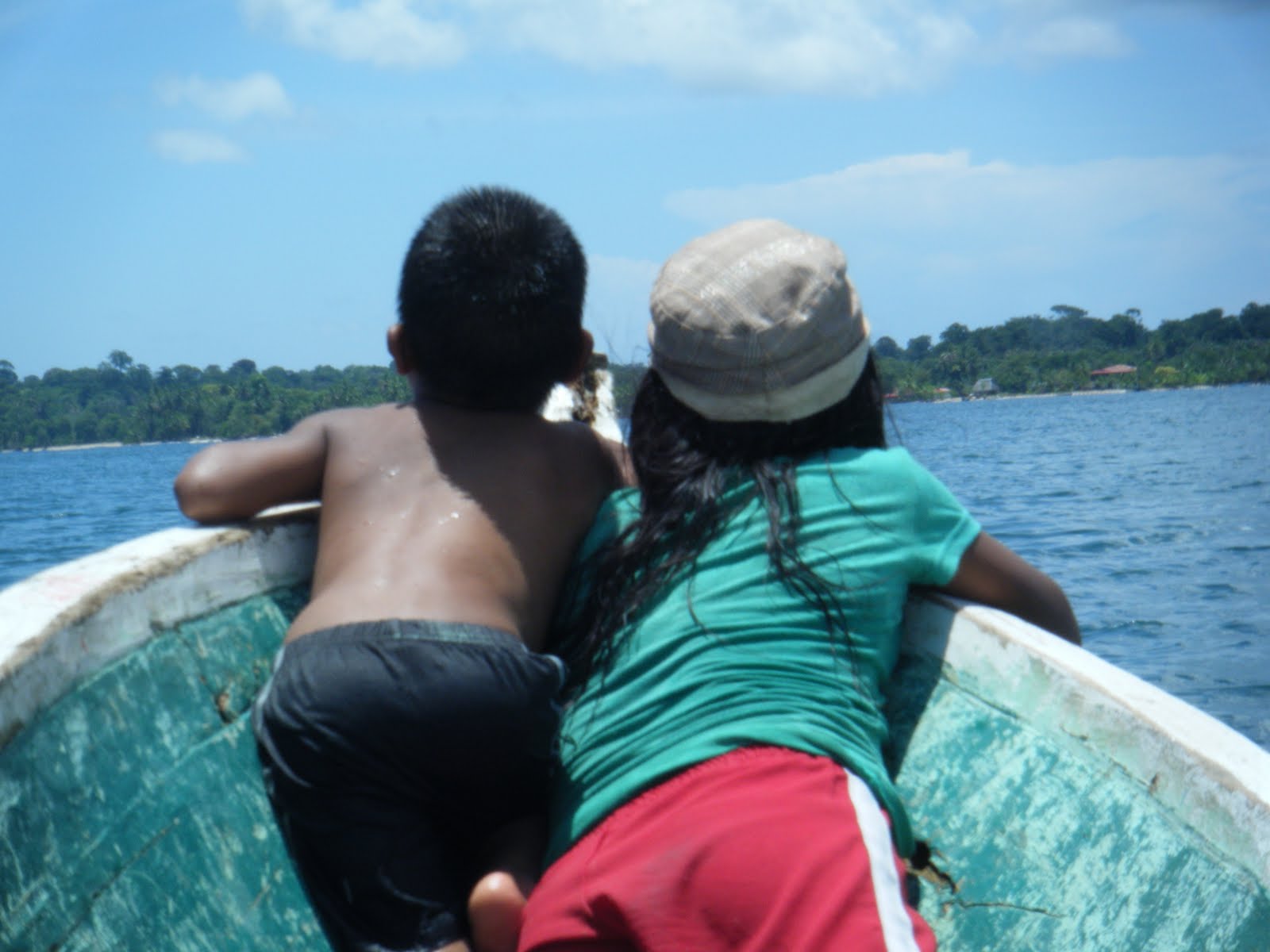
Last Saturday I went on on a trip with a friend from QP and his three kids. My neighbor Pcv Elsie came along and we made a day of fishing and then heading to the beach in a dugout canoe with a motor on back. Pictures:



Saturday, July 30, 2011
Re-Entry
I only have two months left in Panama, and people have been asking how I feel about coming back home. Of course, there are the obvious good-for-a-dinner-party answers, involving funny culture clashes or developmens in the States that I´ve missed. For example, I have no idea how to use a modern cell phone anymore. When I left, the iPhone had only just come out, and I´d only seen one or two. The iPad didn´t exist yet, and my ungainly old Dell laptop didn´t look as ridiculous as it does now sitting next to the ubiquitous dwarfish netbook. If you think I´m overstating the rate of change, I will tell you that when I visited home in December, I walked up to a paper picture of an iPad in Target and, thinking it was real, tried to scroll my fingers across it.
Sad but true.
So there is the anxiety that certain aspects of U.S. culture and life now seem foreign or even undesirable to me. But more than that, I am faced with wrapping up one of he biggest, most important periods of my life. I´ve had the time here to figure out what makes me happy, what I´m good at, not so good at, and take on things that at first seemed impossible. I´ve become so much more patient, serene, and open-minded than I could ever have imagined. When I first got here, I lacked the self-assuredness to believe that I could so much of anythuing here. But somehow, I´m still not sure how, I figured things out little by little, and before I knew it, the journalism major who had never been on a plane before was managing a construction project in an indigenous village.
Sad but true.
And then of course there´s all the news I´ve missed. The BP Oil Spill. The emergence of the Tea Party. Revolutions in the Middle East. The Federal debt crisis. Earthquakes in Haiti, Chile and Japan. Osama´s capture. The Royal Wedding. All of these I´ve-just-come-from-the-jungle-and-I-feel-lost stories are good for a laugh, but I know I can eventually catch up when it comes to scary technology, big headlines and celebrity gossip.
The real reason PCVS worry about their close of service isn´t so much about going back home, but about leaving the country in which we´ve lived and worked for two years. I´ve had a life-changing experience and learned more about myself and this tiny part of the world than I ever imagined I would. And now I am struggling with how to reconcile the old U.S. Catherine with the new Panamanian Cati. My fear is that when I go back home, I will have let go of so much of what I´ve learned and the life I´ve had, in some ways slowly and unconsciously and in others, more abruptly. I know I´ll be homesick for Panama and the way I lived here.
One of the things I like most about Panama is the friendliness and approachability of everyone who lives here. Strangers are always striking up conversation, hanging around and looking out for each other. When you get on a bus, you say ¨Buenos dias!¨to everyone, and most people say it back. If you feel like talking, you just go to your neighbor´s house and pass the time. Here, I feel like I can talk to anyone anywhere about anything. There is a real sense of community.
In the hours I might have previously wasted talking on a phone, surfing the net, or watching trash television, I have made amazing friendships with other PCVs, people who, because of the extreme circumstances we´ve shared, feel closer to me than some people I´ve known my whole life. I´ve loved and been loved by a group of people in my community who I didn´t even know existed two years ago. Panama and the pace of life here offers people this time to get to know each other, to enjoy the company of someone else, and in doing so, become more aligned with one of the essential things that makes life worth living: human connections.
Whereas, in the United States, to a large exent, people have stopped connecting in this baic way. Everyone is too busy with their smart phones to look up and say hi to the person sitting next to them. You could argue that Americans are more connected than ever, with the Internet and social networks that enhance the relationships we have in ¨real life.¨ But I don´t think so. Sharing links or liking someone´s status on Facebook doesn´t offer as much as sitting down and sharing coffee and conversation with that person. In my time here, I have come to feel more connected to myself and the people around me than ever before.
So there is the anxiety that certain aspects of U.S. culture and life now seem foreign or even undesirable to me. But more than that, I am faced with wrapping up one of he biggest, most important periods of my life. I´ve had the time here to figure out what makes me happy, what I´m good at, not so good at, and take on things that at first seemed impossible. I´ve become so much more patient, serene, and open-minded than I could ever have imagined. When I first got here, I lacked the self-assuredness to believe that I could so much of anythuing here. But somehow, I´m still not sure how, I figured things out little by little, and before I knew it, the journalism major who had never been on a plane before was managing a construction project in an indigenous village.
Peace Corps does this to people. It gives you opportunities and responsibilities that you may not deserve, and allows you to run with them. I look back and am amazed by all that´s happened in two years, what the people here have taught me, and how much perspective I´ve gained. An experience this challenging and foreign forces people to evaluate what is really important to them, what they are capable of, and how their life and purpose fits in with those of of the seven billion others. I am sad to let go of this time in my life, where something new happens every day, when I am so constantly challenged, and the rewards for success feel so great. The contrast of highs and lows, combined with the novelty of the things we get to do here, give us the sense of really living and experiencing life completely.
But as much as I have loved Panama, and the life lessons it has taught me, I also have a greater appreciation for the United States and the countless advantages I enjoy for just having been born there. I am excited to go back. I miss my family and friends. I´m burned out by certain aspects of being a PCV and am eager to start the next stage of my life. But I struggle with the idea that the patience, tranqulity and thoughtfulness that have defined my time here will start to fade away. I will miss the simplicity of life, the connectedness to community and nature and the sense that, even if I feel I´m failing, I am still making an effort at something worthwhile. I know parts of this experience will be with me forever, but the pace and competitiveness of U.S. life will surely start to chip away at some of the perspective, patience, and understanding I´ve been forced to adopt here.
It´s difficult to sum up what this experience has meant. It may be something I won´t fully realize until I´ve been back in the U.S. for a while, and even then, something that is so subjective and personal it´ll be hard to articulate. In the mean time, as I tie up the loose strings and prepare to leave, I am being extra-conscious to remember and savor everything I´ve gotten used to-- from the ocean views and rainforest downpours to the kids´ brilliant smiles and bottomless eyes.
I´ve experienced so much , and I can´t afford to forget any of it.
Notes from the Clinic, Part III
A couple of weeks ago, I had to stop by the hospital to get some medicine for an ear infection. (My body, still flummoxed by the environs in which it finds itself, insists on contracting diseases usually affecting small children under the age of five.)
I had the following interaction with a nurse, who weighed me, took my blood pressure, and proceeded to ask some routine check-in questions.
Nurse: How are you?
Cati: Good, thanks. And you?
Nurse: Alright, a little hungry, but that´s not your fault.
Cati: *blink*
Nurse:... do you have a fever?
Cati: I´m not sure, maybe a little.
Nurse: (touches Cati´s arm). AY! My God! You´re burning up!!
Cati: I am? I don´t think...
Nurse: (touches Cati´s arm again) Oh, wait, no, you´re normal.
Without touching a thermometer, she notes 37 degrees Celsius on my chart.
Here´s the thing: They always do this at that hospital. Just ask the patient if she has a fever without ever reaching for the device that would provide an accurate answer. Whyyyyy? Although maybe I should be impressed this time the nurse went so far as to use her finger tip to take a reading, because I mean, it´s the same as a thermometer, right?
I went on to be seen by the doctor, who examined the ear that was bothering me with the ear-flashlight-telescope thing. Then he asked me if the other one was infected. I said I didn´t think so, but wasn´t sure, and he sat down contendedly at his desk and started writing prescriptions. Why wouldn´t you look at the other ear? All he had to do was shuffle six inches to the right and take a peak. WHYYY?!
I always thought of medicine as a science, but am confused by the persistent lack of scientifiy inquiry involved in its practice here in Panama. Just saying, the medical professionals here are doing nothing to convince me that it is inappropriate for me to follow my dream of practicing Dr. Quinn-era frontier medicine in 2011.

I had the following interaction with a nurse, who weighed me, took my blood pressure, and proceeded to ask some routine check-in questions.
Nurse: How are you?
Cati: Good, thanks. And you?
Nurse: Alright, a little hungry, but that´s not your fault.
Cati: *blink*
Nurse:... do you have a fever?
Cati: I´m not sure, maybe a little.
Nurse: (touches Cati´s arm). AY! My God! You´re burning up!!
Cati: I am? I don´t think...
Nurse: (touches Cati´s arm again) Oh, wait, no, you´re normal.
Without touching a thermometer, she notes 37 degrees Celsius on my chart.
Here´s the thing: They always do this at that hospital. Just ask the patient if she has a fever without ever reaching for the device that would provide an accurate answer. Whyyyyy? Although maybe I should be impressed this time the nurse went so far as to use her finger tip to take a reading, because I mean, it´s the same as a thermometer, right?
I went on to be seen by the doctor, who examined the ear that was bothering me with the ear-flashlight-telescope thing. Then he asked me if the other one was infected. I said I didn´t think so, but wasn´t sure, and he sat down contendedly at his desk and started writing prescriptions. Why wouldn´t you look at the other ear? All he had to do was shuffle six inches to the right and take a peak. WHYYY?!
I always thought of medicine as a science, but am confused by the persistent lack of scientifiy inquiry involved in its practice here in Panama. Just saying, the medical professionals here are doing nothing to convince me that it is inappropriate for me to follow my dream of practicing Dr. Quinn-era frontier medicine in 2011.

Visitor's Pass.
One thing I will miss about Panama and my time here is the sense of community. People talk to their neighbors. They come over just to say hi and spend some time talking to you.
I, the resident gringa, of course receive a disproportionate amount of visitors on a daily basis, mostly children and my former host family, and I´m sometimes overwhelmed by the number of people who come parading by on a daily basis. To give you an idea of daily foot traffic in and out, I have made a list entrances and exits on a fairly typical day.
I, the resident gringa, of course receive a disproportionate amount of visitors on a daily basis, mostly children and my former host family, and I´m sometimes overwhelmed by the number of people who come parading by on a daily basis. To give you an idea of daily foot traffic in and out, I have made a list entrances and exits on a fairly typical day.
7 a.m. - My host brother goes to high school at night in Almirante and takes the first bus home in the morning. He usually arrives at my house early in the morning, sometimes just as I am rolling out of bed. I usually try to shoo him away, but as my house is used as a storage bin for all members of my host family, he usually sneaks in to drop something off and then continues to linger until I shoot him enough grumpy morning looks that he gets the hint.
7:15 a.m.- My host family stores their shoes at my house and the kids stop by to wash their feet and put on their uniforms. If I´ve already made breakfast, several moments are reserved for them staring at what I´m eating and telling me it looks gross.
7:30 a.m.- As I am washing up breakfast dishes, the youngest neighbor kids usually come by and ask to come in and play. I usually tell them it´s too early. Unless they offer to wash my dishes, in which case, I pull the stool up to the sink and let them have at it.
7:35 a.m.- Someone comes by with a project-related question. Where is the shovel? Do you have a bucket? How much wood do I need for the walls of my latrine? Will you come and observe every small task associated with my latrine so I don´t make a mistake?
8 a.m.- My former host mother comes in without knocking or announcing her arrival. As I am busy trying to get dressed and ready, she plops down in my chair and announces she is thirsty. If I pretend not to hear or understand, she begins breathing heavily and makes quite the show out of acting tired and dehydrated.
8:30 am.- 4 p.m.- I am out and about working in the community. People come by during this time and report to me later their shock and dismay upon finding the house empty.
4 p.m.- As the children see me coming home from work, they ask to come over. I am usually exhausted and filthy, and it takes my very last reserve bit of patience and benevolence to tell them to let me bathe first. They demand that I call them when I am ready to receive visitors.
4:15 p.m.- Despite said agreement, they yell and ask if it´s time to come over yet. Or they are waiting outside my fence as I emerge from the bathroom, and my dreams of alone time vanish into thin air. I run a comb through my hair and relent.
5:00 p.m.- I kick the children out just in time to have my former host-siblings in the junior-high school come and drop off their shoes, books and clothes.
5:20 p.m.- No sooner do they leave then some other visitors who just got out of class stop by. Often one of my Panama Verde kids or some other directionless youths looking for somewhere to sit and pass the time. My host brother, the one who attends high school otuside of town, usually comes by around this time again on his way to night classses.
6:00 p.m.- By this time my hopes of relaxing in the hammock with a cup of coffee have all but vanished, and I decide to start cooking dinner before it gets too dark. Just as the onions and garlic begin to sizzle, my host dad pops in to drop off his chain saw. He sits and seems like he wants to talk. Sometimes I indulge, other times I refuse to leave he kitchen and concentrate very closely on the onions.
6-8 p.m.- Things are finally quieting down, but at least one person usually stops by to chat, often asking what´s for dinner or if the coffee is ready yet. Sometimes the neighbors send someone over to ask for oil, sugar, or kerosene. Inevitably, the kids arrive and try to come in again, although the ¨no visitors after six o´clock¨ rule has long been enforced.
Please note that this happens in a day when I am out of the house working most of the time. Imagine what happens on the less busy days. I get frustrated with people using my house as a public park and storage room, and sometimes feel that whhole days go by in which I never escape the gaze of visistors and loiterers. But, I do love having neighbors, and being accessible to the community, and I try my best to remind myself that they come by because they like me and that I should soak up all the time I have left with them. But my first cup of morning coffee? I´m not sharing that.
Subscribe to:
Posts (Atom)